The Butcher Who Knew Your Order Before You Said It: When Shopping Was a Relationship
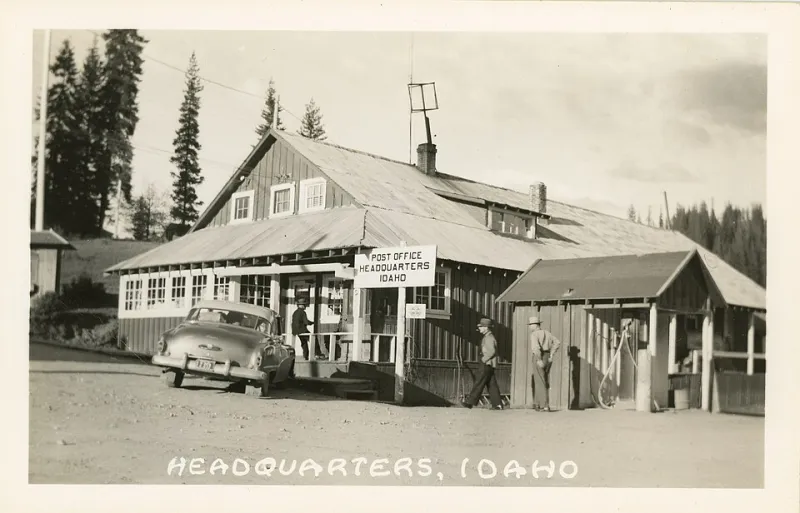
Photo: Steve Shook from Moscow, Idaho, USA, CC BY 2.0, via Wikimedia Commons
Sometime in the mid-1950s, a woman named Eleanor walked into the same butcher shop she'd been visiting every Thursday for eleven years. She didn't need to say anything. The man behind the counter — a second-generation Italian-American named Sal whose father had opened the shop in 1931 — was already reaching for the chuck roast he'd set aside when he saw her come through the door. He knew she bought it every week. He knew she had four kids. He knew her husband had been in the hospital the previous month, because she'd mentioned it, and he'd asked how things were going ever since.
That transaction took about four minutes and cost Eleanor maybe two dollars. But it was also, in a way that's hard to quantify, a small act of being known in the world.
That world is almost entirely gone now. Here's how fast it disappeared — and what it actually meant while it lasted.
The Neighborhood Commercial Web
For the first half of the 20th century, American retail was organized around the specialist. You didn't go to one place and buy everything. You went to several places and bought specific things from people who knew those specific things inside and out.
Your town had a hardware store where the owner remembered that your house had old galvanized pipes and would steer you toward compatible fittings without being asked. It had a pharmacist who knew your prescriptions, flagged potential interactions before that was legally required of anyone, and sometimes extended credit to families who were having a rough month. It had a dry goods store, a shoe repair shop, a bakery, a fish market, a greengrocer. Each of these places was run by someone who had chosen, often for life, to become an expert in one narrow category of human need.
The economics of this system required repeat customers. A butcher couldn't survive on one-time visits — he needed the same families coming back every week, and the way he kept them was by being better than the alternative. Not just better at cutting meat, but better at knowing you: your preferences, your budget, the special occasions coming up. The relationship was the product as much as the product was.
The Speed of the Collapse
The supermarket existed before World War II, but it was the postwar boom that turned it into the dominant American commercial institution. Between 1950 and 1970, the number of independent grocery and specialty food stores in the United States dropped by nearly half. The suburban shopping center absorbed what the supermarket didn't. The discount department store — Kmart, then Walmart — took care of the rest.
The economics were brutally simple: volume purchasing let large retailers undercut small ones on price, and price turned out to matter more to most American consumers than relationship, at least when those two things were in direct competition. The butcher who knew your name charged a little more than the supermarket meat counter. For families on tight budgets in the postwar era, that margin wasn't sentimental — it was real money.
So the small shops closed. Not all at once, and not without resistance. But steadily, over roughly thirty years, the commercial web that had organized American town life for generations was dismantled and replaced by a system optimized for efficiency, scale, and price.
What the Efficiency Model Didn't Capture
Here's what the economic accounting missed: the small shop wasn't just selling goods. It was selling information, trust, and social infrastructure — none of which showed up on a price comparison.
The hardware store owner who remembered your pipes was providing a service that no big-box employee, rotating through departments on a two-week schedule, could replicate. The pharmacist who knew your full medication history was a safety net that predated electronic records by decades. The grocer who extended informal credit to a family between paychecks was functioning as a micro-financial institution that charged no interest and required no application.
Beyond the practical, there was the social dimension. These shops were nodes in the community network. You found out your neighbor was sick when the pharmacist mentioned he'd been filling a lot of prescriptions for her lately. You learned about the new family on Elm Street when the grocer mentioned they'd been coming in. The commercial errand was also, reliably, a social errand — and the two were so intertwined that most people didn't distinguish between them.
 Photo: Elm Street, via images.squarespace-cdn.com
The Algorithm Doesn't Know Your Name
The irony of the present moment is that the technology now exists to recreate something that looks, on the surface, like the old personalized commerce. Amazon knows your purchase history in granular detail. Your grocery app tracks your preferences. Subscription services anticipate your needs. Recommendation engines are remarkably good at predicting what you'll want next.
But there's a meaningful difference between an algorithm that has processed your data and a person who has watched your kids grow up. The algorithm's knowledge of you is extensive but entirely instrumental — it exists to sell you things. The butcher's knowledge of you was incidental to a human relationship that existed on its own terms.
When Sal set aside Eleanor's chuck roast, he wasn't optimizing a conversion rate. He was just paying attention to someone he'd seen every Thursday for eleven years. That kind of attention — unhurried, unmonetized, simply human — was a byproduct of a commercial system that no longer exists.
The shopping is easier now. The prices are lower. The selection is incomprehensibly vast. But the Thursday morning transaction that made Eleanor feel known in the world? That one didn't survive the efficiency revolution.