The Eight-Hour Ordeal That Ruled Every Monday: When Washing Clothes Was an Athletic Event
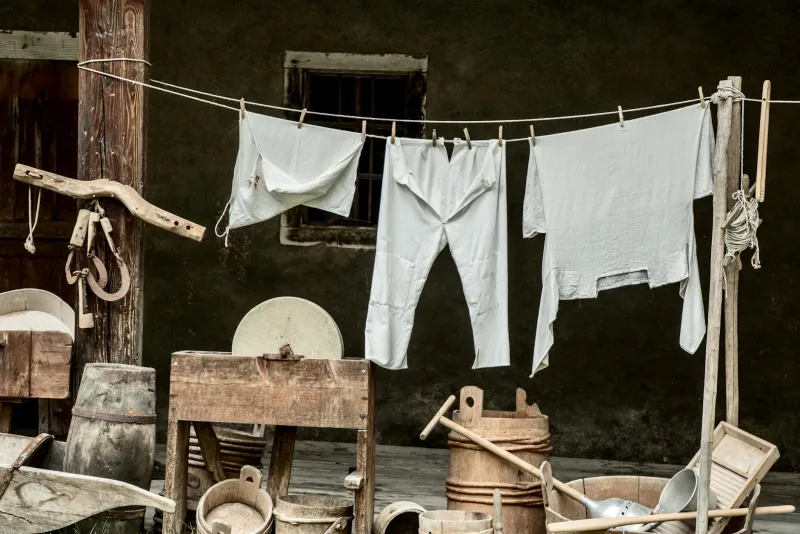
Monday was wash day, and wash day was war.
By 6 AM, American housewives were already hauling buckets of water from wells or pumps, firing up copper boilers, and preparing for what would essentially be an eight-hour workout that happened to clean clothes. This wasn't a chore you squeezed in between other activities—it was the activity, demanding every ounce of physical strength and stamina you could muster.
Today, we toss clothes into a machine, add detergent, and walk away. The entire process requires about thirty seconds of actual human effort. We've become so disconnected from the physical reality of cleaning fabric that most people have never stopped to consider what their great-grandmothers went through just to have clean underwear.
The Brutal Physics of Getting Clean
Before electric washing machines became standard in the 1950s, doing laundry was essentially a full-contact sport played against dirt and fabric. The process started before dawn with hauling water—lots of it. A single load of wash required roughly 40 gallons of water, all of which had to be carried by hand from the nearest source.
That water then had to be heated in massive copper or iron kettles over wood fires, a process that could take hours and required constant attention to prevent scorching. The physical demands were relentless: lifting, carrying, stirring, scrubbing, wringing, and hanging, repeated dozens of times throughout the day.
The actual washing happened on corrugated metal washboards that would destroy your knuckles if you weren't careful. Women developed calluses and permanent hand injuries from the repetitive scrubbing motion required to work soap through fabric. The strongest detergents were harsh enough to burn skin, but they were the only thing that could cut through the grime of daily life in an era before deodorant and frequent bathing.
When Laundry Day Shaped Society
The tyranny of wash day structured American social life in ways we can barely imagine today. Monday was universally understood to be unavailable for social visits, errands, or anything else that might interfere with the laundry marathon. Tuesday was for ironing—another full-day commitment involving heavy metal implements heated over fires.
Neighborhoods developed informal support networks around laundry day. Women would help each other with the heaviest lifting, share scarce soap and supplies, and watch each other's children during the most labor-intensive phases. The communal clotheslines that stretched behind houses weren't just functional—they were social spaces where news, gossip, and mutual aid were exchanged.
The physical demands also meant that doing laundry was genuinely dangerous work. Burns from boiling water and hot irons were common. Back injuries from lifting heavy, water-soaked fabrics could disable women for weeks. The combination of fire, water, and exhaustion created conditions where serious accidents were a constant threat.
The Revolution You Never Think About
The automatic washing machine didn't just change how Americans cleaned their clothes—it fundamentally restructured how they spent their time and energy. What had been a weekly physical ordeal that consumed roughly 20% of a woman's waking hours suddenly became a task that required minimal human involvement.
The transformation was so dramatic that many women initially didn't trust the machines. After generations of believing that clean clothes required intense physical effort, the idea that a machine could do the work better seemed almost impossible. Early washing machine advertisements had to convince skeptical customers that less effort could actually produce better results.
The ripple effects extended far beyond laundry rooms. Women who had been physically exhausted every Monday suddenly had energy for other activities. The rigid weekly schedule that had revolved around wash day began to dissolve, replaced by the flexibility to do laundry whenever it was convenient.
The Invisible Gift of Automation
Today's Americans have inherited roughly eight hours of free time every week that their ancestors spent scrubbing clothes by hand, but most people have no idea this gift even exists. We take for granted that laundry happens in the background of our lives, requiring nothing more than the occasional transfer from washer to dryer.
The physical fitness required for pre-machine laundry was substantial enough that many women maintained muscle tone and cardiovascular health through wash day alone. Ironically, as laundry became easier, Americans had to invent new forms of exercise to replace the workout they'd lost.
Modern complaints about doing laundry—the inconvenience of sorting colors, the annoyance of folding—would have seemed laughably trivial to someone who spent every Monday bent over a washboard until their hands bled. We've become so removed from the physical reality of cleaning fabric that we've forgotten how much human suffering our machines have eliminated.
The Strength We've Forgotten
The next time you're annoyed that your washing machine takes 45 minutes to complete a cycle, remember that your great-grandmother would have considered that machine a miracle worthy of worship. She would have gladly traded her weekly eight-hour ordeal for your thirty seconds of button-pushing and occasional folding.
Wash day wasn't just about getting clothes clean—it was about survival in an era when physical strength determined quality of life. The women who conquered those Monday marathons weren't just doing laundry; they were athletes competing against dirt, exhaustion, and time itself.
We've gained more than clean clothes from our modern machines. We've gained freedom from a form of domestic labor so demanding that it structured entire societies around its requirements. That's a revolution worth remembering, even if it happened one washing machine at a time.