The Cart That Held Five Vegetables and Nothing Else: Reconstructing a Week of Groceries, 1955 vs. Now
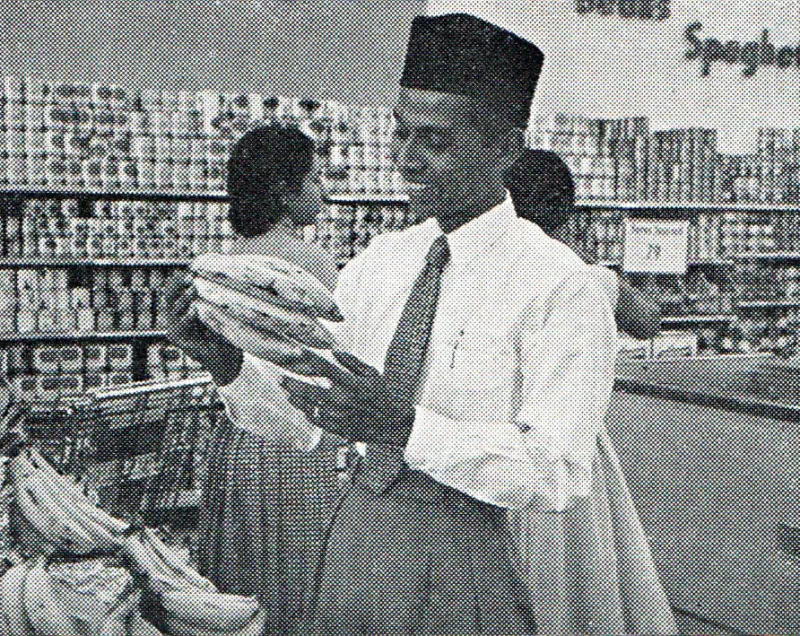
Photo: Uncredited. Published by the United States Information Service., Public domain, via Wikimedia Commons
Let's do a strange exercise: walk through a mid-century supermarket with a 1955 shopping list, then push the same cart through a modern store. Not to romanticize the past — the '50s kitchen had plenty of problems — but because the contents of that cart reveal how completely American eating has been rebuilt, one shelf at a time.
What Went in the Cart
A typical family of four in 1955 bought, in rough terms: a few pounds of ground beef and a whole chicken, potatoes, cabbage, carrots, onions, and whatever green vegetable was in season — say, green beans in July, nothing fresh in February. Bread, butter, eggs, milk by the gallon, flour, sugar, coffee, and maybe a box of cereal. If the budget allowed, a can of pineapple or a frozen juice concentrate as a small luxury.
Notice what's missing. No snack aisle haul. No bottled water. No year-round berries flown in from Chile. No protein bars, no hummus, no oat milk, no frozen entrées beyond a modest and much-mocked TV dinner. Dessert existed, but it was made at home from those bags of flour and sugar, not purchased in individual sleeves.
Snacking as we know it barely registered. Between meals, you had an apple — in season — or you had nothing. The modern habit of grazing from 9 a.m. to 10 p.m. would have struck a 1955 shopper as bizarre and expensive.
The Store Itself Was a Different Planet
Here's the number that stops people: the average American supermarket in the mid-1950s stocked roughly 2,000 distinct items. Today's large-format store carries north of 30,000, and a mega-warehouse club can push past 100,000 SKUs.
Part of that is genuine abundance. Seasonal-only produce meant no fresh tomatoes in January; now global supply chains deliver them twelve months a year. Part of it is the long tail of variety — forty kinds of salad dressing where there used to be two.
But a surprising amount of the growth is a whole category of eating that didn't exist: packaged snacks, ready meals, flavored beverages, and single-serve everything. The 1955 cart fed a family. The modern cart feeds a family, plus their commute, plus their desk lunches, plus their 11 p.m. couch hours.
What the Comparison Actually Teaches Us
Run the numbers on eating patterns and a few things jump out. Americans in the 1950s ate more calories at the table and almost none outside of it; today, roughly a third of our calories come from food prepared away from home, before you even count the packaged stuff. Portion sizes have ballooned across the board. And the sheer availability of food — cheap, shelf-stable, engineered to be delicious — has reshaped public health in ways the 1955 shopper never had to think about. Their challenge was getting dinner on the table. Ours is stopping at two servings.
There's a wrinkle, though. The nostalgic version of this story — 'they ate real food and were thinner' — skips a lot. The 1955 diet was heavy on white bread, fat, and cigarettes with dinner. Home economics meant meatloaf five ways. Fresh produce availability was genuinely poor by modern standards, and diet-related knowledge was thin on the ground.
The Cart as a Mirror
The honest takeaway isn't that the old cart was better or worse. It's that the two carts describe two different relationships with food. In 1955, groceries were ingredients, meals were an event that happened three times a day, and the supermarket was a small, predictable room. Today, food is ambient — available at the gas station, the airport, the app, at any hour.
Whether that's progress depends on which shelf you're standing at. But next time you're in a 30,000-item store, it's worth remembering: your great-grandmother would have recognized about 7 percent of it, and she'd have made dinner from the part she did.