When Your Grocer Was Your Neighbor: How Shopping Became Surveillance
When Your Grocer Was Your Neighbor: How Shopping Became Surveillance
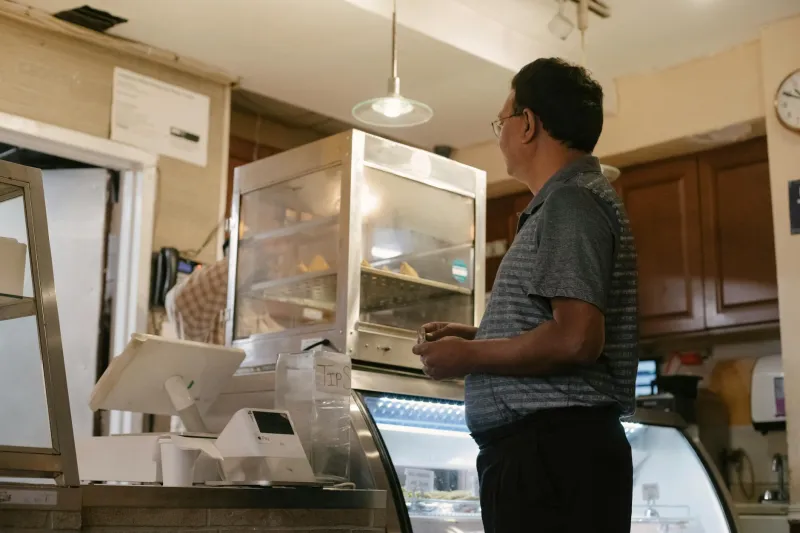
Walk into a supermarket in 1920s America, and you'd encounter a scene almost unrecognizable to modern shoppers. The general store or neighborhood grocery wasn't just a transaction hub—it was a social institution. The owner stood behind the counter, often knew your family's name and history, and maintained a leather-bound ledger tracking what you bought, how much you owed, and when you typically came in. If your daughter was getting married, they knew. If you were struggling financially, they'd extend credit without paperwork. Shopping was personal. It was human.
The grocer didn't need data analytics. They had memory, intuition, and genuine community ties. They understood their customers' preferences not through algorithms but through conversation. "Mrs. Henderson always wants her eggs on Thursday before church," they'd tell their clerk. "The Murphy boy is working now, so they'll be buying more meat." This wasn't creepy—it was neighborliness.
The Supermarket Revolution
Then came the supermarket. Starting in the 1930s and exploding after World War II, massive self-service stores fundamentally rewired how Americans bought food. No more asking the clerk to fetch items from behind the counter. No more personal relationships with store owners. Instead: fluorescent aisles, endless choices, and anonymity.
At first, this felt like liberation. Customers loved the independence, the selection, the lower prices made possible by scale. The personal touch seemed like an antiquated inconvenience. Why wait for a clerk when you could grab what you wanted?
But something shifted in the 1980s and 90s. Supermarkets realized they'd lost the personal data they once had naturally. They couldn't remember your habits anymore. So they invented a new system: the loyalty card.
The Data Bargain We Didn't Read
When you swiped that first grocery loyalty card, you made a trade you probably didn't fully understand. For discounts and convenience, you agreed to let the store track every single purchase. Not just what you bought, but when, how often, and in what combinations.
This data became worth more than the discounts themselves. Supermarkets used it to optimize shelf placement, predict inventory needs, and—most importantly—sell that information to manufacturers and data brokers. Your grocery habits became a commodity.
Today, that system has evolved into something far more sophisticated. Loyalty apps track your location as you move through the store. Facial recognition cameras identify repeat customers. Personalized coupons appear on your phone based on algorithms that know your dietary preferences, income level, and even health concerns (high cholesterol? Here's a statin ad). Amazon's Just Walk Out technology eliminates the need for checkout entirely—cameras and weight sensors track every item you touch.
The grocer who knew you personally has been replaced by an invisible surveillance network that knows you statistically.
What We Gained and What We Lost
Don't misunderstand: modern grocery shopping offers genuine advantages. Selection that would have seemed impossible in 1950. Lower prices adjusted for inflation. Convenience that saves time. Access to foods from around the world. These are real improvements.
But the trade-off is worth examining. The neighborhood grocer had limits—they could only track what they remembered, and they had incentive to treat you fairly because they'd see you every week for years. Today's system has no such constraints. Your data is bought, sold, analyzed, and used against your interests as often as for them. You're not a customer anymore; you're a data point being optimized.
The personal relationship created accountability. The algorithmic relationship creates efficiency. We chose efficiency, and we got it. But we also got a system where your shopping habits are known by dozens of companies you've never heard of, where prices change based on who you are, and where manipulation happens at scales the old grocer could never have imagined.
In 1920, the grocer knew your name but couldn't track your every move. Today, the supermarket doesn't know your name at all—but it knows everything else. We traded intimacy for optimization, and we're still not sure if we got the better deal.