The Medical Mystery Years: When Getting Sick Meant Playing a Guessing Game
The Medical Mystery Years: When Getting Sick Meant Playing a Guessing Game
Imagine waking up with chest pain and heading to the doctor, only to be told: "We'll need to watch and wait." Not for a few hours or days, but potentially for months or years. Welcome to medicine before the 1970s, when getting a diagnosis was often like solving a puzzle with half the pieces missing.
When Doctors Were Medical Detectives
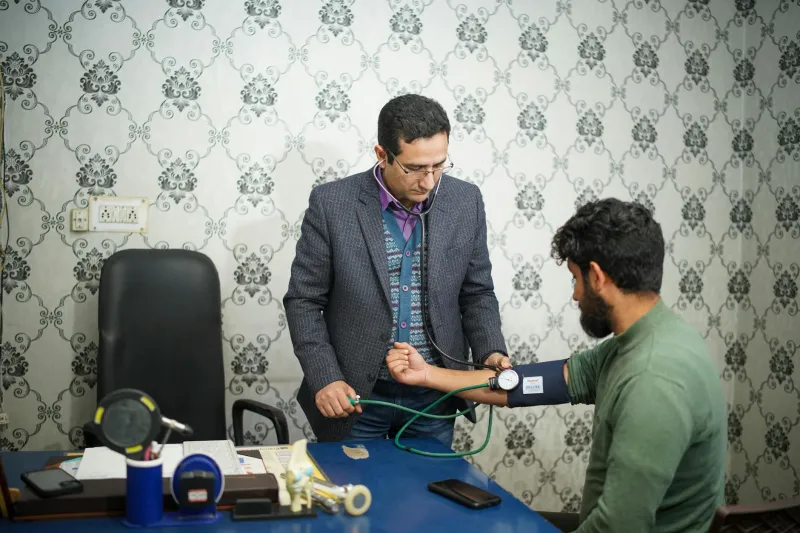
In 1950, if you walked into a doctor's office complaining of fatigue and joint pain, your physician would pull out a stethoscope, check your pulse, and maybe order a basic blood count. That was about it. The entire diagnostic arsenal consisted of what doctors could see, hear, touch, and smell.
Dr. William Osler, often called the father of modern medicine, famously said "Listen to your patient; he is telling you the diagnosis." This wasn't just good bedside manner advice – it was literally all doctors had to go on.
Take heart disease, America's number one killer. Before the electrocardiogram became widely available in the 1960s, doctors diagnosed heart attacks by watching patients writhe in pain and checking for specific physical symptoms. Many "indigestion" cases were actually heart attacks that went unrecognized until it was too late.
The Trial and Error Decades
Without X-rays, CT scans, or blood panels, medicine operated on a process of elimination that could stretch on indefinitely. Doctors would prescribe treatments and see what worked. If the patient improved, they'd found their answer. If not, it was back to the drawing board.
Consider tuberculosis, which killed more Americans than any other disease in the early 1900s. The only way to diagnose TB was to watch for the telltale signs: persistent cough, weight loss, and the dreaded "consumption" appearance. By the time these symptoms appeared, patients had often been spreading the disease for months.
Even more frustrating were conditions like diabetes. Before blood glucose tests became routine in the 1960s, doctors diagnosed diabetes by literally tasting patients' urine for sweetness. The condition was often discovered only after patients had already developed serious complications like blindness or kidney failure.
When Time Was the Only Medicine
The phrase "wait and see" dominated medical practice. Doctors couldn't peek inside the body, so they had to let diseases run their course to understand what they were dealing with. This meant patients lived in limbo, often for years, wondering what was wrong with them.
Appendicitis serves as a perfect example of this diagnostic nightmare. Before ultrasounds and CT scans, doctors diagnosed appendicitis through physical examination alone. They'd press on the abdomen, check for specific pain patterns, and make their best guess. The stakes were life or death – wait too long, and the appendix could rupture. Operate unnecessarily, and you've just performed major surgery on a healthy person.
Many patients died not from their actual condition, but from the time it took to figure out what was wrong. Others lived with chronic pain and disability because their treatable conditions went unrecognized.
The Diagnostic Revolution
The transformation began in the 1970s and exploded in the following decades. Suddenly, doctors could see inside the human body without cutting it open. CT scans arrived in the mid-1970s, followed by MRI machines in the 1980s. Blood tests became sophisticated enough to detect specific markers for dozens of conditions.
Today's diagnostic speed would seem like magic to doctors from just 50 years ago. A patient can walk into an emergency room with chest pain and receive a definitive diagnosis within 30 minutes through blood tests, EKGs, and imaging. Conditions that once required months of observation can now be identified in a single visit.
Consider how we diagnose heart attacks today. Troponin blood tests can detect heart muscle damage within hours. EKGs show electrical abnormalities in real time. Echocardiograms reveal how well the heart is pumping. What once required weeks of bedrest and observation now takes minutes.
The Human Cost of Medical Uncertainty
The psychological toll of not knowing was immense. Patients and families lived with constant anxiety, unable to plan for the future or understand what they were fighting. Many people simply accepted chronic illness as their fate because medicine couldn't tell them otherwise.
Families would gather around bedsides not knowing if their loved one had a minor ailment or a terminal disease. The phrase "only time will tell" wasn't just a medical saying – it was a way of life.
What We Take for Granted
Today, we expect immediate answers. We get frustrated if lab results take more than 24 hours or if a doctor needs to order additional tests. We've forgotten that our grandparents lived in an era when medical uncertainty was the norm, not the exception.
The next time you receive test results on your phone or get a same-day diagnosis, remember that this instant medical clarity is a recent miracle. For most of human history, getting sick meant entering a world of questions without answers, where patience wasn't just a virtue – it was a medical necessity.
The warped timeline of medical diagnosis shows us how dramatically our relationship with illness has changed. We've gone from living with medical mysteries to expecting medical certainty, and that transformation happened faster than most people realize.