The Busy Signal Was Real Life: How Completely Different Calling Someone Used to Be
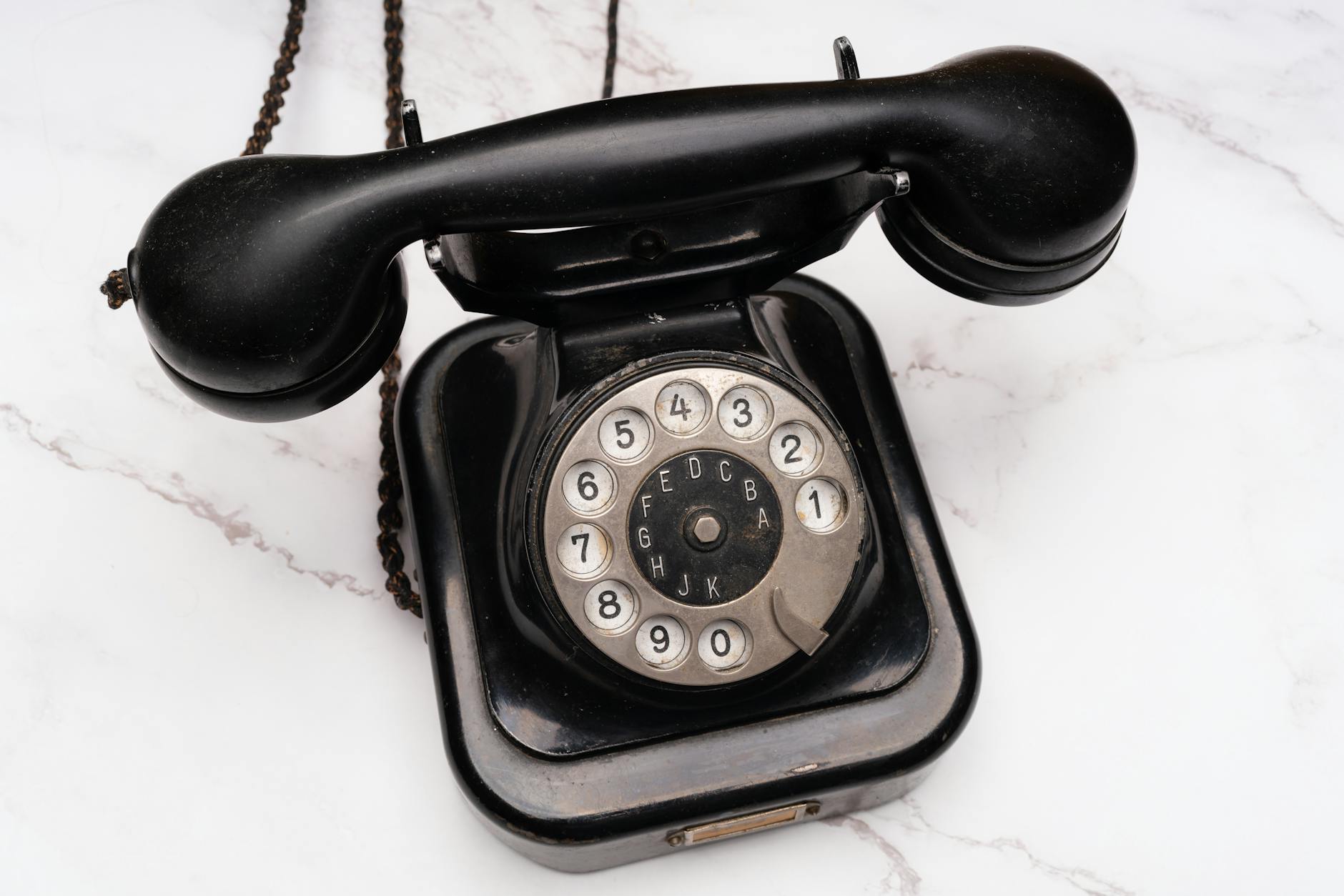
The Busy Signal Was Real Life: How Completely Different Calling Someone Used to Be
There's a specific sound that an entire generation grew up hearing and that most people under thirty have never encountered in the wild: the busy signal. A flat, rhythmic beeping that meant exactly one thing — someone else was already on that line, and you were out of luck. No voicemail. No option to leave a message. No notification. Just that sound, and then silence, and then the decision about whether to try again in five minutes or just give up entirely.
If that sounds mildly inconvenient, you're not fully appreciating the world it came from. Before caller ID, before answering machines became common, before voicemail was a standard feature, the telephone operated under a completely different set of social rules. Rules that, once you understand them, make the smartphone era feel less like an upgrade and more like a different reality entirely.
You Had No Idea Who Was Calling
This is the one that's hardest to reconstruct in your imagination if you grew up with caller ID: every single phone call, before you answered it, was a mystery. The phone rang. It could be your mother. It could be your boss. It could be a salesman. It could be a wrong number. You picked up and said "hello" and then you found out.
There was no screening. No glancing at your phone and deciding whether now was a good time. You answered or you didn't — and if you didn't, you had no way of knowing what you missed, because there was no record of a missed call. The phone just rang, and then it stopped, and the moment passed.
This created a particular kind of social anxiety that's almost hard to articulate now. Answering the phone was a small but genuine act of commitment. You were agreeing to engage with whoever was on the other end before you knew who that was. In households with teenagers, this led to elaborate negotiations about who would answer, and a constant low-level alertness whenever the phone rang.
The Party Line Problem
Go back a few more decades — to the 1940s and 1950s in many rural American communities — and the situation gets even stranger. Party lines were shared telephone connections where multiple households used the same physical line. You'd pick up the phone and might find your neighbor already mid-conversation. You could listen in (and many people did). You had to wait your turn.
Each household on a party line had a distinctive ring pattern — two long rings, or one short and one long — so you knew which calls were meant for you. But the system was porous by nature. Privacy was something you negotiated rather than assumed. In small towns, the telephone operator who connected your calls often knew everyone in town personally and was, in practice, a node in the local information network.
This wasn't considered scandalous. It was just the texture of communication at the time.
The Answering Machine Changed Everything (The First Time)
When residential answering machines became affordable and widespread in the late 1970s and through the 1980s, they were genuinely revolutionary. For the first time, a missed call didn't have to stay missed. You could leave a message. Someone could know you called. The asynchronous phone call became possible.
But even that came with its own friction and etiquette. Leaving a message on someone's answering machine was a considered act. You had to speak clearly, leave your number (slowly, so it could be written down), and say something coherent — all while aware that your voice was being recorded and might be played back multiple times. The beep that signaled "start talking now" made a surprising number of people freeze.
And the machine itself was a physical object in someone's home. If you called and they were there, they could hear you leaving the message in real time — what became known as "screening." The social rules around screening were fuzzy and occasionally tense. Was it rude to not pick up when you were clearly home? What if you just didn't feel like talking? These were genuine questions people navigated.
Long Distance Was a Budget Item
One more dimension that's easy to forget: calling someone far away used to cost real money, billed by the minute. Long-distance calls — anything outside your local calling area — were metered, and the rates were high enough that many families had strict rules about them. Sunday afternoons were a common time for long-distance family calls because rates were lower on weekends. People planned those calls. They were events.
The casual "I'll just call you when I land" that we say constantly now would have been a minor extravagance in 1978. People wrote letters. They planned their check-ins in advance. Communication over distance required intention in a way that instant, free messaging has completely dissolved.
What We Quietly Gave Up
It would be easy to read all of this as pure progress — and in most practical ways, it is. Caller ID, voicemail, texting, and now the irony of smartphones that most people barely use for actual calls have made communication dramatically more efficient and less stressful.
But there's something else worth noting. The friction of the old phone system forced a certain kind of presence. When you did reach someone, you were both fully there — no notifications, no other conversation threads running in parallel, no option to ghost. A phone call was a commitment that both people made simultaneously, in real time, with no safety net.
That kind of connection is rarer now. Not because people are less interested in each other, but because the technology has made it so easy to communicate without ever quite being fully present. The busy signal was annoying. But at least when the line was finally clear, you knew someone was really there.