Red Sky at Night, Sailor's Delight: When America's Weather Predictions Came From Poems
When Your Life Depended on Reading Clouds
On September 8, 1900, Isaac Cline stood on the beach in Galveston, Texas, watching the Gulf waters rise. As the local Weather Bureau chief, he had access to the most advanced meteorological tools of his era: a barometer, a thermometer, and telegraph reports from distant cities. Yet he had no idea that the deadliest natural disaster in American history was about to make landfall.
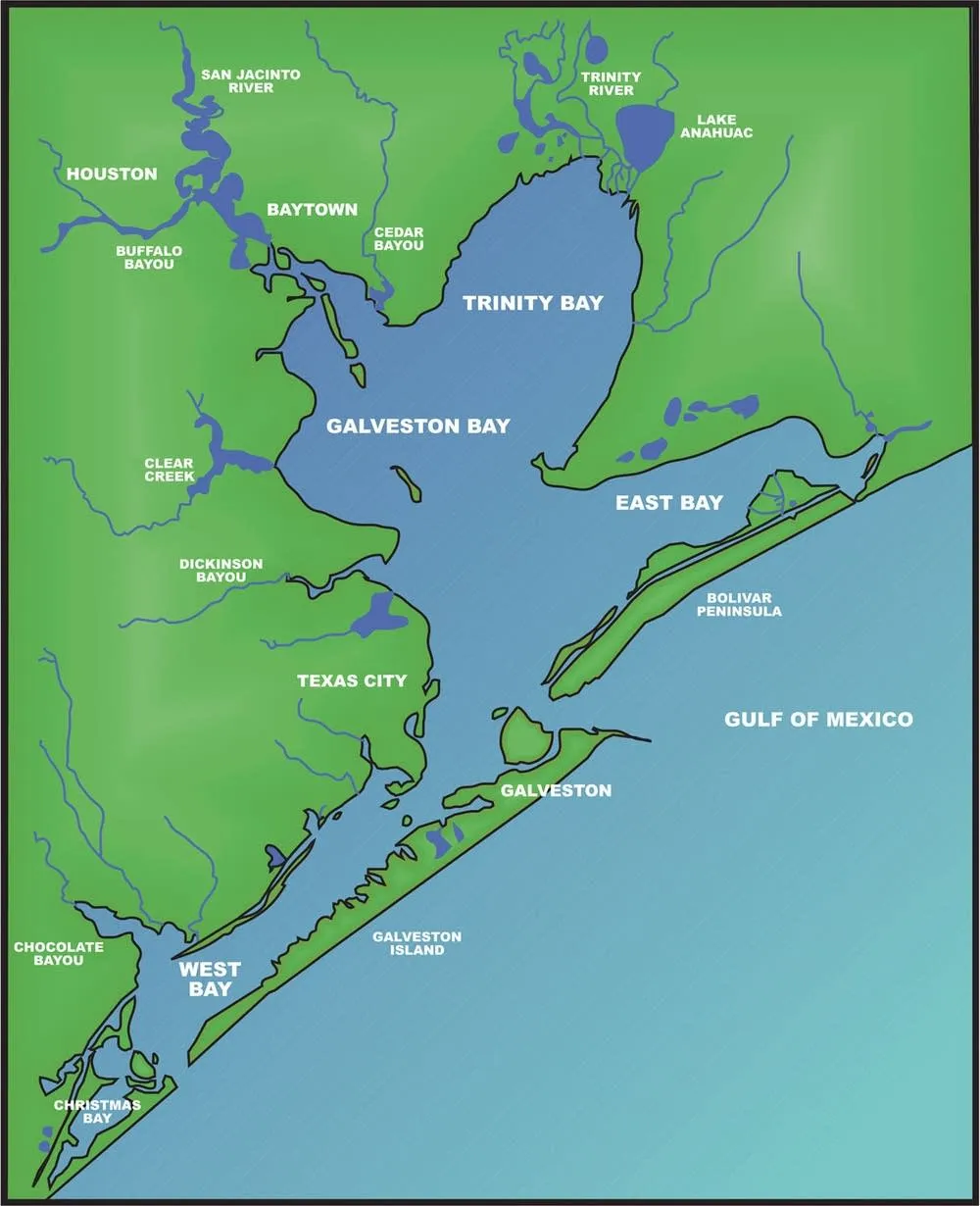 Photo: Galveston, Texas, via img.apmcdn.org
The Great Galveston Hurricane killed over 8,000 people that day, partly because weather forecasting in 1900 was barely more sophisticated than ancient folklore. Americans lived in a world where storms arrived without warning, where a sudden temperature drop could destroy an entire harvest, and where "weather wisdom" passed down through generations was often your best defense against nature's surprises.
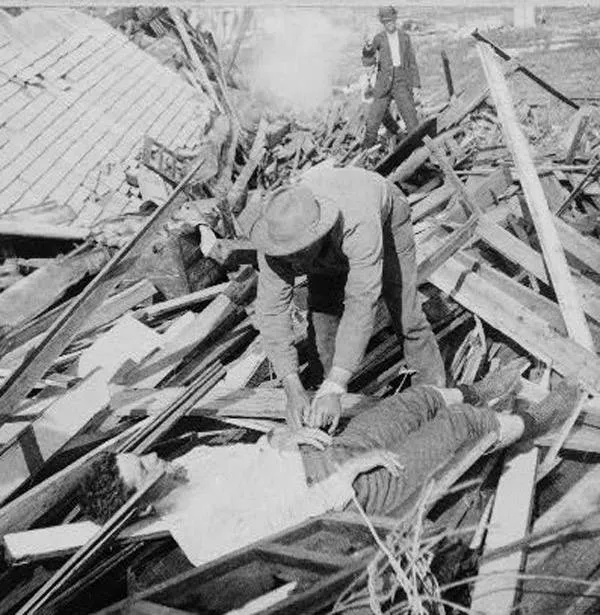 Photo: Great Galveston Hurricane, via allthatsinteresting.com
The Age of Almanacs and Old Wives' Tales
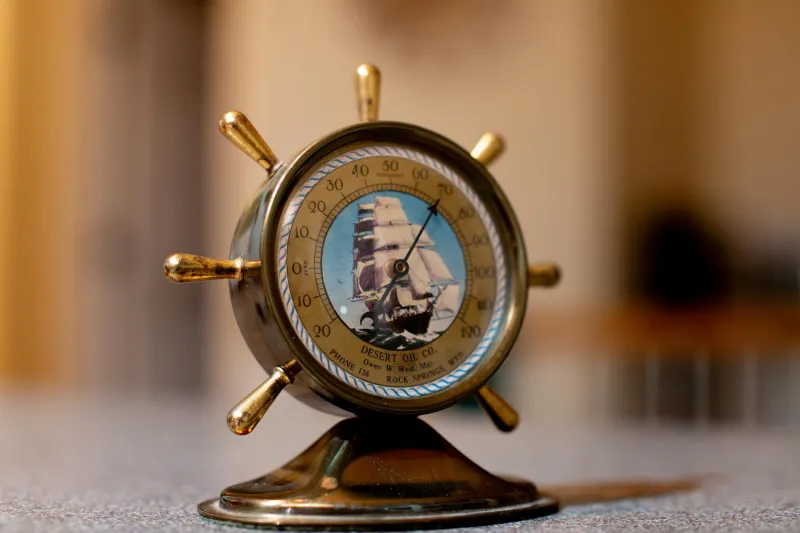
For most of American history, predicting weather meant consulting a curious mix of science, superstition, and inherited wisdom. Farmers' almanacs, first published in colonial times, combined astronomical calculations with folk observations. "Red sky at night, sailor's delight; red sky at morning, sailors take warning" wasn't just a catchy rhyme—it was practical meteorology for people whose livelihoods depended on reading atmospheric clues.
Rural Americans developed an almost supernatural ability to sense weather changes. They watched how their animals behaved, noticed which direction smoke drifted, and paid attention to the ache in their grandmother's arthritic joints. These weren't quaint customs; they were survival skills in an era when a surprise blizzard could trap your family for weeks or an unexpected drought could bankrupt your farm.
The U.S. Weather Bureau, established in 1870, represented the federal government's first serious attempt at scientific forecasting. But even their methods seem primitive by today's standards. Weather observers across the country would take readings at specific times and telegraph their data to Washington, where meteorologists would hand-draw weather maps and make educated guesses about what might happen next.
When Getting Caught in a Storm Could Kill You
Without advance warning systems, Americans faced weather-related dangers that seem almost unimaginable today. The Schoolhouse Blizzard of 1888 earned its name because it struck the Great Plains during school hours, trapping children in one-room schoolhouses as temperatures plummeted to -40°F. Many students and teachers froze to death trying to walk home in whiteout conditions.
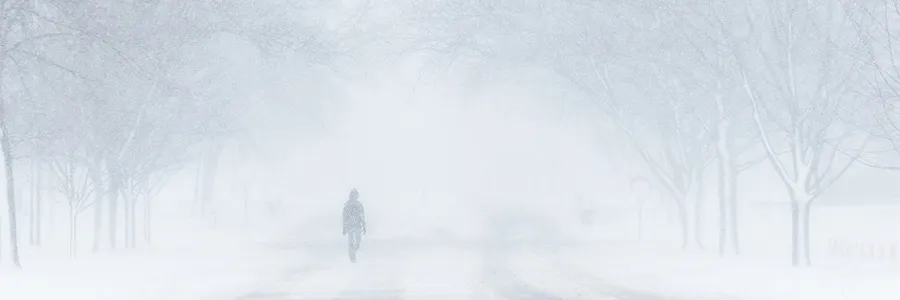 Photo: Schoolhouse Blizzard, via cdn.weatherworksinc.com
Tornadoes were particularly terrifying because they struck without warning. The Tri-State Tornado of 1925 carved a 219-mile path of destruction across Missouri, Illinois, and Indiana, killing 695 people. Most victims had no idea what was coming until they heard the roar of approaching winds. Compare that to today's tornado watches and warnings, which can alert entire communities hours before a storm arrives.
Even routine weather posed constant challenges. Farmers planted crops based on almanac predictions and family tradition, often losing entire harvests to unexpected frosts or droughts. Ship captains relied on barometric pressure readings and cloud formations to avoid storms, leading to countless maritime disasters when weather patterns shifted unexpectedly.
The Revolution in the Sky
The transformation of weather forecasting accelerated dramatically after World War II. Military meteorologists had learned to track weather patterns across vast distances, and new technologies like radar began revealing the internal structure of storms. The launch of TIROS-1 in 1960, America's first weather satellite, marked the beginning of the modern era—suddenly, meteorologists could watch weather systems develop from space.
Computer modeling changed everything. By the 1970s, powerful computers could process millions of atmospheric data points and generate forecasts based on mathematical models rather than human intuition. The National Weather Service, successor to the old Weather Bureau, began issuing increasingly accurate predictions for everything from daily temperatures to severe thunderstorms.
Doppler radar, deployed nationwide in the 1990s, gave meteorologists unprecedented ability to see inside storms. They could now detect rotation in thunderstorms before tornadoes formed, track the movement of precipitation, and even estimate wind speeds from hundreds of miles away.
Your Pocket Meteorologist
Today's weather forecasting would seem like magic to someone from 1900. Your smartphone contains more meteorological data than entire weather stations once possessed. Hyperlocal forecasts can tell you when rain will start and stop on your specific street. Severe weather alerts arrive as push notifications, giving you precious minutes to seek shelter.
The accuracy improvements are staggering. A five-day forecast today is as accurate as a three-day forecast was in the 1980s. Hurricane tracking has improved so dramatically that evacuation orders can be issued days in advance, saving thousands of lives. The same storm that devastated Galveston with no warning would now trigger alerts across multiple states, complete with projected paths and impact timelines.
Weather apps provide information that would have been impossible to gather just decades ago: real-time lightning strikes, minute-by-minute precipitation forecasts, and air quality indexes. We've become so accustomed to knowing exactly what weather to expect that a forecast bust—when predictions prove wrong—makes national news.
The Cost of Certainty
This meteorological revolution came at a price measured in billions of dollars. The National Weather Service operates a network of satellites, radar stations, weather balloons, and supercomputers that costs taxpayers over $1 billion annually. Private weather companies like AccuWeather and Weather Underground employ teams of meteorologists and computer scientists to process data that flows in from thousands of sources every minute.
Yet Americans have gained something invaluable: the ability to plan their lives around weather rather than being surprised by it. Farmers use detailed forecasts to time planting and harvesting. Airlines route flights around storms before they develop. Emergency managers evacuate coastal areas days before hurricanes make landfall.
When Weather Was Still Wild
Perhaps most remarkably, we've lost the sense of weather as an unpredictable force that could upend daily life without warning. Our ancestors lived with a healthy respect for nature's power because they never knew when it might strike. They watched the sky constantly, noticed subtle changes in wind direction, and always had backup plans for outdoor activities.
Today's hyper-accurate forecasts have made weather feel manageable, controllable even. We check our phones and know whether to bring an umbrella, whether to postpone the picnic, whether to take the scenic route home. The anxiety of not knowing what weather might surprise us has been replaced by the comfort of seven-day forecasts and hourly updates.
That transformation from folklore to supercomputers represents one of the most successful applications of technology to daily life. Americans no longer live at the mercy of weather—they live in partnership with it, armed with information their grandparents could never have imagined.