Saturday Night at the Palace: When Movies Were America's Church
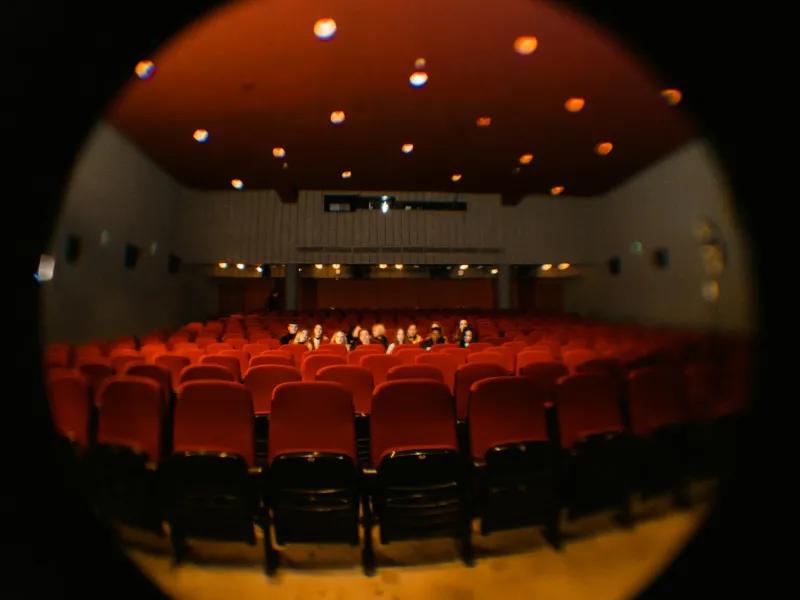
The Last Time America Agreed on Anything
Every Saturday night in 1946, something remarkable happened across America. From the Fox Theater in Detroit to the Paramount in Los Angeles, millions of Americans performed the same ritual: they got dressed up, walked to their neighborhood cinema, and sat in the dark with strangers to watch the same stories unfold on silver screens.
That year, Americans bought 4.1 billion movie tickets. In a country of 140 million people, that's roughly 30 tickets per person—including babies. Today, with 330 million Americans, we buy about 1.2 billion tickets annually. We've tripled our population but lost two-thirds of our moviegoing habit.
When Your Neighborhood Had a Palace
The geography of entertainment looked completely different then. Every town with more than 5,000 people had at least one movie theater, often built like a palace with velvet seats, ornate ceilings, and names like the Regal, the Majestic, or the Palace. These weren't just businesses—they were the social centers of American communities.
In small-town Iowa, the Strand Theater wasn't just where you watched Clark Gable; it was where you saw your neighbors, where teenagers went on dates, where families made their weekly pilgrimage to shared stories. The theater owner knew your name, your usual seat, your favorite candy from the concession stand.
Compare that to today's multiplex experience: a maze of identical screening rooms in a suburban strip mall, where the teenage staff doesn't know you exist and the person next to you is probably checking their phone.
The Ritual of Getting Ready
Going to the movies in 1946 meant something. You didn't roll out of bed in sweatpants and flip-flops. Saturday night at the pictures required preparation: men wore their good shirts and slicked back their hair, women put on their nicest dresses and applied fresh lipstick in the theater's ornate bathroom mirrors.
The evening began with anticipation. You'd check the newspaper for showtimes, maybe call the theater to confirm what was playing. There was no scrolling through endless options or reading reviews online. You trusted the movie industry to deliver something worth your Saturday night, and remarkably, they usually did.
When Hollywood Owned Saturday Night
The numbers tell an incredible story. In 1930, 65% of Americans went to the movies at least once a week. By 1946, the average American saw 35 movies per year in theaters. Think about that: nearly three movies per month, every month, for the entire population.
Hollywood didn't just make movies; they manufactured America's shared cultural experience. When "The Best Years of Our Lives" played at your local theater, it wasn't just entertainment—it was a communal processing of World War II's aftermath. Everyone in town would see it, discuss it, quote it.
The Great Unraveling
Television didn't kill movie theaters overnight, but it began a slow strangulation that took decades to complete. In 1948, there were 102,000 television sets in America. By 1955, there were 32 million. Suddenly, entertainment came to you instead of requiring a journey.
The suburban migration finished what TV started. As Americans moved to the suburbs, they left behind those neighborhood theaters for shopping mall multiplexes. The ornate Palace became a generic "Cinema 8" next to the food court.
What Streaming Stole
Today, we have more entertainment options than any generation in human history. Netflix alone offers more movies than you could watch in several lifetimes. Yet something essential vanished in the transition from Saturday night at the Palace to Thursday night on the couch.
We lost the shared experience. In 1946, if you hadn't seen "It's a Wonderful Life," you were missing out on conversations at work, at church, at the grocery store. Today, we're all watching different shows on different schedules on different devices. We have infinite choice but no common cultural language.
We also lost the magic of anticipation. When movies came to your neighborhood theater, you waited for them. You looked forward to them. You made plans around them. Now, everything is available instantly, which paradoxically makes nothing feel special.
The Death of Appointment Entertainment
Perhaps most significantly, we lost what media scholars call "appointment entertainment"—the idea that culture happens at specific times and places, bringing communities together. Saturday night at the movies was America's secular church service, a weekly gathering where strangers became a temporary congregation, united in darkness and wonder.
Today's entertainment is convenient, personalized, and infinite. But it's also isolating, fractured, and forgettable. We've gained control over our viewing experience but lost something harder to quantify: the feeling that we're all part of the same story.
The Last Picture Show
Those grand neighborhood theaters are mostly gone now, converted to churches, restaurants, or simply demolished. The few that remain are museums of a different America, when Saturday night meant something specific, when getting dressed up was part of the entertainment, when the whole town gathered in the dark to dream the same dreams.
We can stream anything, anytime, anywhere. But we'll never again have what our grandparents had: a weekly appointment with wonder, a neighborhood palace where America came together to watch itself on screen.