Thumbs Up for Total Strangers: When Americans Trusted Random Drivers With Their Lives
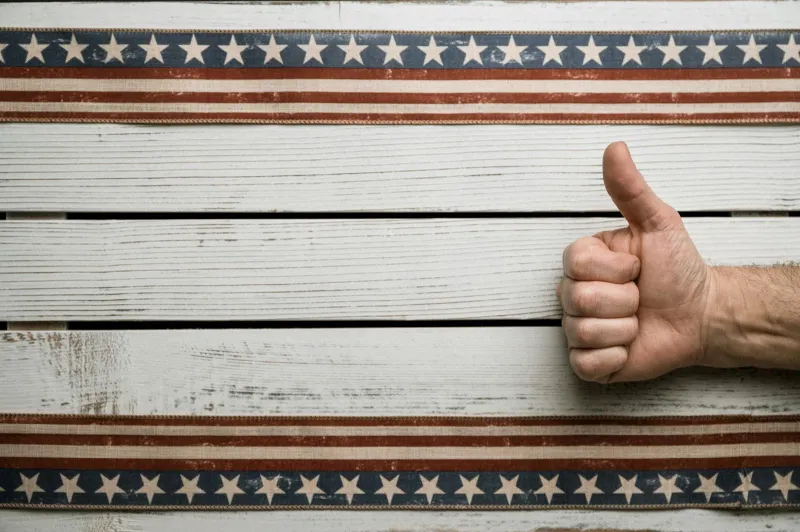
Picture this: You're standing on the side of Route 66 in 1955, thumb extended, waiting for a ride. A family sedan pulls over, and without knowing anything about the driver except that they're heading your direction, you hop in. No background check, no ID verification, no GPS tracking your location. Just pure, unfiltered trust between total strangers.
This wasn't reckless behavior—it was Tuesday.
When Hitching a Ride Was Just Getting a Ride
For most of the 20th century, hitchhiking was woven into the fabric of American transportation. During World War II, soldiers in uniform could expect a ride within minutes on any major highway. College students routinely thumbed their way across the country for spring break or summer jobs. Workers without cars depended on the kindness of strangers to get to and from their shifts.
The numbers tell the story: In 1974, the Federal Highway Administration estimated that 2.5 million Americans hitchhiked regularly. That's roughly equivalent to the entire population of Chicago sticking their thumbs out on a regular basis.
Highway etiquette was surprisingly sophisticated. Drivers knew the unspoken rules: soldiers and students got priority, women traveling alone were given extra consideration, and anyone who looked like they might cause trouble was simply passed by. Most hitchhikers carried handwritten signs with their destination, turning roadside pickup into an efficient matching system.
The Infrastructure of Trust
What made this system work wasn't just goodwill—it was a completely different social infrastructure. Gas stations served as informal hitchhiking hubs where travelers could safely wait and drivers could easily spot them. Small towns along major routes had designated pickup spots that everyone knew about.
Motor clubs like AAA actively encouraged members to offer rides to stranded motorists and hitchhikers. The practice was so mainstream that etiquette guides included chapters on proper hitchhiking behavior, covering everything from where to stand to how to split gas money.
Even the police were in on it. Rather than viewing hitchhikers with suspicion, cops often helped connect drivers with passengers, especially during bad weather or late at night. Some police departments kept informal lists of regular hitchhikers to help ensure their safety.
When Everything Changed
The transformation didn't happen overnight, but by the 1980s, hitchhiking had shifted from normal to dangerous in the American imagination. High-profile crimes involving hitchhikers—both as victims and perpetrators—created a feedback loop of fear that the practice never recovered from.
The rise of affordable cars played a role too. As vehicle ownership became nearly universal, the pool of people who needed rides shrank dramatically. What had once been a mutual aid system among Americans who all faced similar transportation challenges became something that only happened when someone's car broke down.
Insurance companies began warning customers about liability risks of picking up strangers. Parents who had hitchhiked across the country in their youth now forbade their children from even considering it. The practice that had once symbolized American openness and mobility became associated with desperation and danger.
The Social Cost of Safety
Today, the idea of hitchhiking strikes most Americans as somewhere between quaint and insane. We've gained undeniable safety and predictability in our transportation, but we've lost something harder to quantify: the routine interaction between strangers that came with sharing rides.
Those millions of hitchhiking encounters weren't just about getting from point A to point B. They were micro-exchanges of trust that connected Americans across class, regional, and generational lines. A businessman giving a ride to a college student, a farmer picking up a traveling salesman—these interactions created a web of casual human connection that our current transportation system simply doesn't provide.
Modern ride-sharing apps like Uber and Lyft have recreated some of the convenience of hitchhiking, but they've eliminated the spontaneous human element that made the original system socially meaningful. Every interaction is mediated by algorithms, tracked by GPS, and filtered through corporate liability policies.
The America We Left Behind
The death of hitchhiking represents more than just a change in transportation habits—it reflects a fundamental shift in how Americans think about risk, trust, and community. We've traded the possibility of meaningful encounters with strangers for the certainty of controlled interactions.
In 1960, extending your thumb on a highway was an act of faith in your fellow Americans. Today, that same gesture would be seen as either hopelessly naive or actively dangerous. The roads are safer, the cars are faster, and we're all more isolated than ever.
Every time you unlock your phone to summon a ride instead of simply asking the person next to you, remember: there was a time when Americans trusted each other enough to share the road with complete strangers. And somehow, most of the time, it worked out just fine.