When a Letter Could Take Two Weeks and Still Feel Like a Miracle
When a Letter Could Take Two Weeks and Still Feel Like a Miracle
Imagine waiting twelve days to find out if your brother made it safely to Chicago. Twelve days of not knowing. No ping, no read receipt, no quick voice memo. Just silence, and then — if you were lucky — an envelope with a familiar handwriting on the front.
That was normal life for most Americans well into the 20th century. And here's the strange part: people didn't experience that wait as deprivation. They experienced it as life.
The Ritual Nobody Talks About Anymore
Writing a letter wasn't just communication. It was an event. You sat down, you gathered your thoughts, you chose your words deliberately — because crossing something out or starting over cost you time and paper. There was no delete key. What you wrote had weight, literally and figuratively.
For families spread across the country — and by the early 1900s, migration and westward expansion had scattered millions of American families across enormous distances — letters were the primary way relationships survived. A mother in Virginia might know her son in California only through the letters he sent every few weeks. Those pages weren't just updates. They were proof that someone still existed, still thought of you, still cared enough to sit down and say so in ink.
The U.S. Postal Service, which traces its roots back to 1775, became one of the most important institutions in American social life precisely because of this. A single postage stamp — which cost just two cents for a first-class letter in 1900 — could carry a piece of someone's inner world from one coast to the other. That's a remarkable thing when you stop to think about it.
What the Wait Actually Did to People
Here's something that gets lost in the nostalgia: the waiting wasn't just inconvenient. It shaped how people related to each other in profound ways.
When you knew a response was weeks away, you wrote differently. You wrote everything. You described the weather, the smell of the kitchen, the argument you had with a neighbor, the dream you couldn't shake. Letters from the 19th and early 20th centuries are extraordinarily rich documents precisely because people understood that the gap between messages had to be filled with substance. There was no room for "lol" or a quick thumbs-up emoji. You had to actually say something.
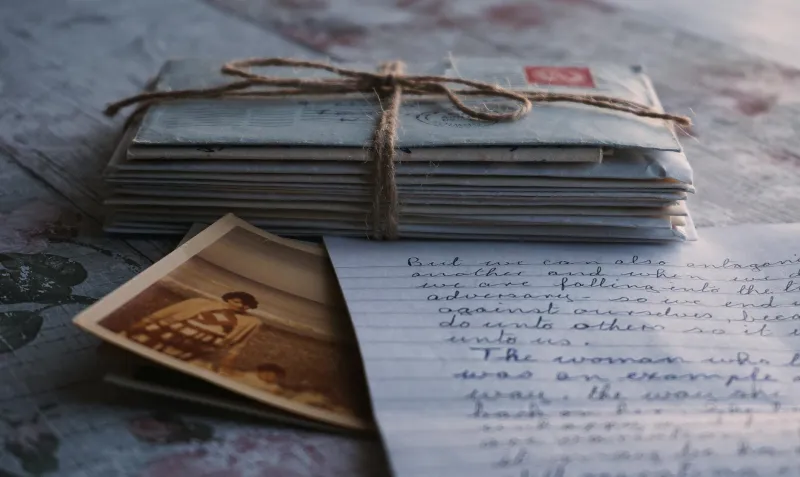
And when the reply finally arrived? People kept them. Bundled with ribbon, stored in boxes, passed down through generations. The Library of Congress holds millions of personal letters. Historians have reconstructed entire lives, love stories, and political movements from private correspondence that ordinary people thought to preserve.
How many of your text conversations from 2019 still exist?
The Collapse Happened Fast
The telephone started eroding letter-writing in the mid-20th century, but the real demolition came in stages. Email arrived in mainstream American homes during the 1990s and shaved the wait from weeks to seconds. Then came SMS. Then smartphones. Then messaging apps that tell you not just that a message was delivered, but that the other person is currently typing.
Each step in that chain made communication faster and, in a measurable sense, easier. Nobody is arguing that waiting two weeks for news from a sibling was a good system. But something shifted alongside the convenience that we don't talk about much.
The emotional weight of staying in touch essentially collapsed. When sending a message costs nothing — no time, no effort, no postage stamp, no deliberate thought — it also signals nothing. A text that says "thinking of you" carries a fraction of the meaning that a handwritten letter carried, even if the words are identical. Effort is a form of love. Friction, it turns out, was doing a lot of quiet work.
What We Actually Lost
This isn't an argument for going back. Nobody wants to wait two weeks to find out if their kid landed safely. But it's worth sitting with what the frictionless version of connection has actually cost us.
We communicate more than any generation in human history — and many people report feeling more disconnected than ever. The average American sends and receives dozens of messages a day, yet surveys consistently show rising rates of loneliness. There's a real question buried in that contradiction.
The letter demanded that you show up fully. It required you to think about the other person long enough to fill a page. It created an object that the recipient could hold, re-read, and keep. It said: you mattered enough for me to do this slowly.
Instant messaging says: I had thirty seconds.
Both can be genuine. But they're not the same thing, and pretending they are might be one of the quieter losses of modern life — the kind you don't notice until you find a box of old letters in someone's attic and realize, with a jolt, just how differently people used to speak to each other.
The stamp still exists, technically. First-class mail will still carry your words across the country. But the last time you wrote a letter to someone you loved — not a birthday card, not a thank-you note, but a real letter — was probably longer ago than you'd like to admit.