When Your Body Was a Black Box: The Terrifying Era Before Doctors Could See Inside You
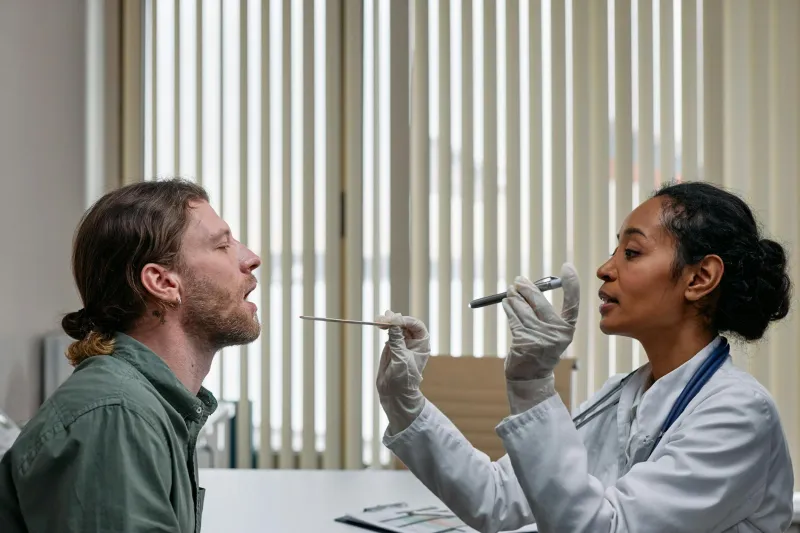
Picture this: you wake up with severe abdominal pain. In 2024, you'd head to the emergency room where a CT scan would reveal the problem within minutes. But if this happened in 1950, your doctor would press on your stomach, ask you to describe the pain, and essentially make an educated guess about what might be killing you.
This wasn't medicine—it was medical roulette. And for thousands of years, it was the best humanity could do.
The Age of Medical Detective Work
Before the 1970s, when medical imaging became widely available, doctors were essentially detectives working a case with half the evidence missing. They had their hands, their ears, and whatever the patient could tell them. That was it.
A skilled physician might tap on your chest to listen for fluid in your lungs, or press on your abdomen to feel for unusual lumps. They'd check your pulse, look at your eyes, and ask detailed questions about your symptoms. The really good ones developed an almost supernatural ability to diagnose based on these limited clues.
But even the best doctors were working blind. Internal bleeding, brain tumors, kidney stones, heart defects—all of these potentially fatal conditions existed in a realm of educated guesswork.
When Appendicitis Was a Death Sentence
Consider appendicitis, one of the most common surgical emergencies today. In modern America, it's almost routine: pain in the lower right abdomen, a quick CT scan confirms the diagnosis, and you're in surgery within hours. The survival rate is over 99%.
But in the early 1900s, appendicitis killed roughly 50% of its victims. Not because surgeons couldn't remove an appendix—they'd figured that out. The problem was knowing when to operate. Without imaging, doctors couldn't distinguish between appendicitis, kidney stones, ovarian cysts, or a dozen other conditions that caused similar pain.
Wait too long to operate, and the appendix would burst, causing deadly peritonitis. Operate too quickly on the wrong diagnosis, and you'd just subjected a patient to unnecessary surgery with a significant risk of death from infection or complications.
Doctors were trapped in an impossible situation: damned if they did, damned if they didn't.
The Pregnancy Guessing Game
Pregnancy was another medical mystery. Today, an ultrasound at 20 weeks reveals not just that you're pregnant, but the baby's position, health, and even gender. Doctors can spot problems early and plan accordingly.
For most of history, pregnancy was confirmed by missed periods and physical changes. Doctors couldn't tell if a baby was developing normally, positioned correctly for birth, or even if there was just one baby. Twins were a complete surprise until labor began.
Breech births, which today are often identified weeks in advance and managed with planned C-sections, were discovered only when the baby's feet appeared first during delivery. The maternal mortality rate in 1900 was about 850 deaths per 100,000 births—compared to just 17 per 100,000 today.
The Heart Attack Guesswork
Heart attacks presented another deadly puzzle. Today's emergency rooms use EKGs, blood tests, and imaging to quickly identify heart muscle damage and open blocked arteries within hours. The phrase "time is muscle" drives modern cardiac care.
But before these tools existed, heart attacks were often confused with indigestion, anxiety, or muscle pain. Patients might suffer for days while doctors tried different treatments, unsure if they were dealing with a cardiac emergency or something harmless.
Even when doctors suspected a heart attack, they had no way to see which arteries were blocked or how much heart muscle was dying. Treatment was essentially supportive care and hope.
The Revolution That Changed Everything
The transformation began in the 1970s when CT scans started appearing in American hospitals. For the first time in human history, doctors could see inside a living person without cutting them open.
MRI machines followed in the 1980s, providing even more detailed images of soft tissues. Ultrasounds became routine for pregnancy monitoring. Nuclear medicine allowed doctors to watch organs function in real-time.
Suddenly, the black box of the human body became transparent. Conditions that had puzzled doctors for centuries became instantly diagnosable. Emergency rooms that once operated on educated guesswork could now provide definitive answers within minutes.
The Price of Certainty
This medical revolution came with a cost that would shock earlier generations. A single MRI can cost $3,000. CT scans run $1,000 or more. The machines themselves cost millions of dollars and require specially trained technicians to operate.
In 1950, a doctor's visit might cost $5 (about $60 today). Now, getting to the bottom of mysterious symptoms can easily cost thousands of dollars. We've traded uncertainty for expense—and most of us consider it a bargain.
Living in the Light
Today's medical students learn on incredibly detailed images of human anatomy. They can watch blood flow through arteries and see tumors smaller than a pea. What once required years of experience to detect by touch can now be spotted by a first-year resident looking at a screen.
We've become so accustomed to medical certainty that we get frustrated when doctors can't immediately explain every symptom. But just 50 years ago, medicine was still largely a guessing game played with life-or-death stakes.
The next time you're getting an ultrasound or CT scan, remember: you're experiencing technology that would seem like magic to doctors from just two generations ago. Your body isn't a black box anymore—and that's one of the most remarkable changes in human history.