Before the Algorithm: The Radio Era When a Stranger Decided What You'd Love Next
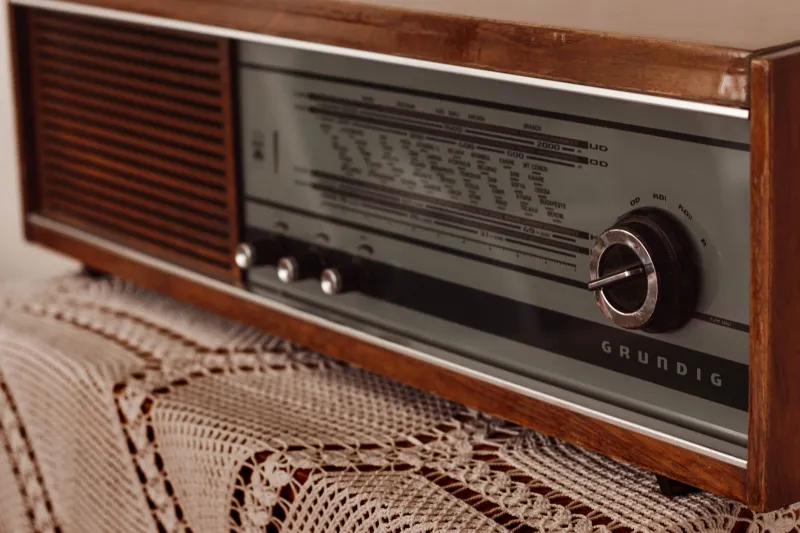
Picture it: you're driving somewhere in 1987, maybe on a highway in Ohio, and a song comes on the radio that you've never heard before. You don't know the artist. The genre isn't quite what you'd normally choose. But you're in a car, going 65 miles per hour, and you can't skip it. So you listen.
And somewhere around the second chorus, something clicks.
That accidental discovery — the song you never would have searched for, the artist you'd never have found on your own — was one of the defining features of American musical life for most of the 20th century. Radio didn't just broadcast music. It made decisions on your behalf. And those decisions, made by human beings with their own tastes and instincts, shaped what the country listened to in ways that an algorithm optimizing for engagement simply cannot replicate.
The DJ as Cultural Gatekeeper
In radio's golden era, the disc jockey wasn't just a voice between songs. They were a genuine tastemaker — someone who decided, often based on gut feeling and local knowledge, what their audience was ready to hear. The best DJs had a sixth sense for the gap between what listeners thought they wanted and what they'd actually love once they heard it.
This was especially true in the era before corporate consolidation homogenized radio formats. Local stations had local personalities, regional sounds, and programming decisions that reflected the actual community they broadcast into. A station in Memphis played differently than one in Chicago or Los Angeles — not just in genre, but in texture, in the specific songs chosen, in the rhythm of the broadcast day.
Listeners had essentially no control over this. You could change the station, but you were still surrendering to someone else's choices. The power dynamic was clear: they programmed, you listened. And within that constraint, something genuinely interesting happened.
The Productive Discomfort of Passive Listening
Forced exposure is an underrated force in cultural life. When you have no option to skip, you stay with things longer than you would by choice. You give the unfamiliar a chance it wouldn't get if your thumb were hovering over a button.
This is how entire generations of Americans developed musical tastes that crossed genre lines in ways that seem almost impossible today. A country fan in 1975 heard Motown between their favorite Merle Haggard tracks. A rock listener in 1969 might have a Burt Bacharach song lodged in their memory simply because it played during a long drive and there was nowhere else to go. The cross-pollination wasn't curated. It was accidental. And accidents, in music, are often where the good stuff lives.
There's real research backing this up. Studies in music psychology consistently show that repeated, involuntary exposure to unfamiliar music increases liking — a phenomenon called the "mere exposure effect." Radio didn't just introduce people to new artists. The format itself, through repetition and passive listening, built affection for songs that active listeners might have dismissed on first encounter.
The Hit Song as Shared Experience
There's another dimension to the radio era that gets overlooked in nostalgia for it: the communal aspect of a genuine hit. When a song became number one in 1983, it wasn't number one in a niche. It wasn't topping the "indie folk for dog owners" chart on a streaming platform. It was everywhere — in cars, in kitchens, in waiting rooms, in every American context simultaneously.
That universality created a kind of cultural common ground that's genuinely hard to manufacture today. When someone references "Don't Stop Believin'" or "Like a Prayer" or "Smells Like Teen Spirit," they're not invoking a personal preference. They're pointing at a shared moment in the culture — a song that was inescapable enough that virtually everyone has a memory attached to it.
Today's streaming landscape produces plenty of enormously popular music, but the experience of consuming it is fundamentally individual. Your Spotify Wrapped is yours. Your recommended playlist is built around your listening history. The algorithm knows what you like and keeps serving it back to you in slightly varied arrangements. It's efficient. It's satisfying. And it's quietly narrowing.
The Serendipity Problem
Here's what streaming platforms have quietly eliminated: genuine surprise. Not the algorithmic "you might also like" surprise, which is really just a statistical extension of your existing taste. Real surprise — the kind that comes from encountering something completely outside your comfort zone and being forced to sit with it.
The discover features on Spotify and Apple Music are well-intentioned, but they're still built on your data. The algorithm starts from what it knows about you and works outward in small increments. It is, by design, incapable of serving you something truly foreign to your listening history. That's not a bug. It's the feature. But it means the kind of cross-genre, cross-demographic musical exposure that radio provided almost automatically is now something you have to actively seek — and most people don't.
The result is a music landscape that's more fragmented than at any point in American history. Not just in genre, but in shared reference points. Two people in their thirties today might have almost entirely non-overlapping musical maps, even if they grew up in the same city, went to the same schools, and lived similar lives. Radio, for all its limitations, prevented that kind of cultural atomization.
What the Static Gave Us
There's a version of this story that's pure nostalgia — the idea that radio was simply better, that we've lost something irreplaceable, that the algorithm is the villain. That's too simple. Streaming has democratized music production and distribution in genuinely revolutionary ways. Artists who would never have gotten radio play now have direct access to global audiences. The sheer volume and diversity of music available today is staggering compared to what a radio listener in 1978 could access.
But there's a real cost to living inside a taste bubble of your own construction. The music you never choose is often the music that surprises you most. The song you can't skip is sometimes the one you remember longest.
Radio understood something that algorithms are still learning: sometimes the best thing a medium can do is make a decision for you — and make you sit with it long enough to find out why it was right.