The Performance You Rehearsed in Your Head at 7 A.M.: When Calling in Sick Was a One-Take Show
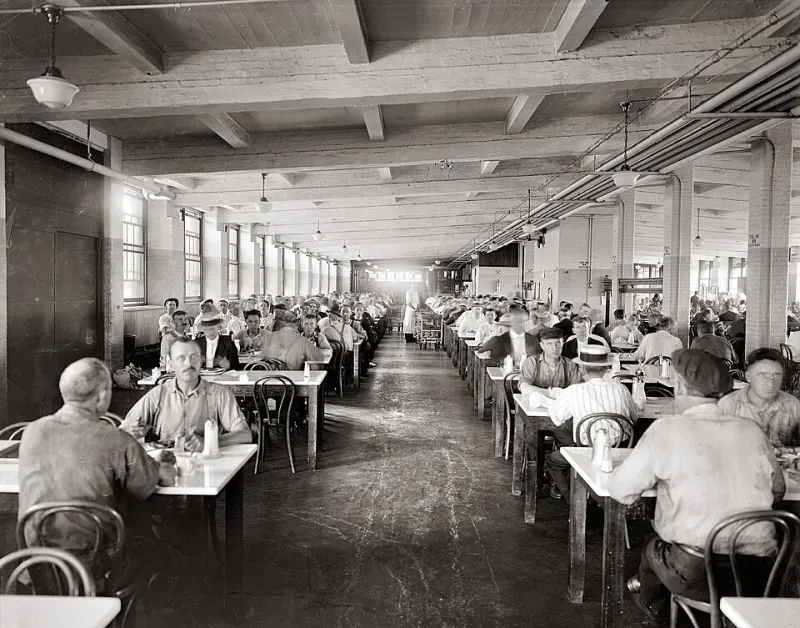
Photo: United States Federal Government, Public domain, via Wikimedia Commons
There was a very specific kind of dread that used to accompany a Tuesday morning decision to stay home from work. Not the guilt, exactly — though there was plenty of that — but the preparation. The mental rehearsal. The careful calibration of how sick you needed to sound without going so far that your boss would suggest you see a doctor immediately.
For most of the twentieth century, taking a sick day was a live performance with no second takes.
The Hot Line to Your Boss
Before email, before HR portals, before the blessed anonymity of a leave-request dropdown menu, calling in sick meant one thing: dialing your supervisor directly. Not a general inbox. Not a ticketing system. Your boss. The person who knew your voice, your habits, and whether you'd seemed perfectly healthy at the Friday afternoon meeting.
You had maybe ninety seconds to establish credibility. Too much detail and you sounded rehearsed. Too little and you sounded evasive. The cough had to come naturally — or at least naturally enough. Some people ran their voices ragged beforehand. Others called from under a blanket to muffle the acoustics. A few genuinely convinced themselves they were ill through sheer commitment to the bit.
The social stakes were real. This wasn't a form submission disappearing into a database. This was a conversation that would be remembered. Your boss would see you on Monday. They would look at you. And somewhere in the back of their mind, they would be doing the math.
The Unwritten Rules of the Fake Sick Day
American workplace culture in the mid-twentieth century had a surprisingly nuanced set of informal rules around illness and absence. You didn't call in sick on a Monday too often — that was suspicious. You didn't call in the day after a big game or a holiday weekend without a very good story. And you certainly didn't show up on Wednesday looking tan.
Bosses, for their part, developed a finely tuned radar for authenticity. Some were sympathetic. Others asked pointed follow-up questions. What does the doctor say? Should we expect you tomorrow? These weren't necessarily hostile — they were just the natural result of a system where human beings were actually accountable to other human beings in real time.
There was something uncomfortable about that system. But there was also something that kept people honest in a very direct, personal way. The friction wasn't bureaucratic. It was social.
When the Buffer Arrived
The shift happened gradually. Email crept into the workplace through the 1990s and early 2000s, and with it came the first real buffer between employee and manager. Suddenly, calling in sick could become emailing in sick — a text-based medium that removed tone, removed vocal performance, and introduced the concept of composing your excuse at your own pace.
Then came HR software. Leave management platforms. Digital absence reporting systems with dropdown menus and automatic approval workflows. By the 2010s, at many large companies, a sick day could be logged without any human interaction at all. You clicked a button. The system updated. Your manager received a notification.
The performance was over. The audience had left the building.
What We Gained — and What We Quietly Lost
The convenience is undeniable. Modern absence systems are fairer in many ways. They create consistent records, reduce the power imbalance between employees and managers who might respond differently based on personal favoritism, and they remove the anxiety of that early-morning phone call for people who genuinely are unwell and shouldn't have to perform wellness while feeling terrible.
But something else evaporated along with the discomfort.
When absence became algorithmic, the social contract around it changed fundamentally. The act of calling in sick used to carry weight precisely because it involved another person. There was a moment of reckoning, however brief, that connected your decision to the real-world impact it had on colleagues and schedules. That connection wasn't always pleasant, but it was human.
Today, the average American employee at a mid-sized company can notify their entire team of an absence in under thirty seconds without speaking to anyone. The friction is gone. So is the relationship that friction, awkward as it was, helped maintain.
The Bigger Picture
What the evolution of the sick-day call really reveals is how broadly American workplace culture has shifted from personal accountability to procedural accountability. We've traded the nervous phone call for the compliance checkbox. We've replaced the knowing look from your manager with an automated email confirmation.
Neither system is purely better. The old way could be humiliating, uneven, and dependent on whether your boss happened to be in a good mood at 7:15 in the morning. The new way can feel hollow — a transactional click that acknowledges your absence without ever truly registering it.
Somewhere between the rehearsed cough and the leave portal dropdown, a small but real thread of human connection at work quietly snapped. Most people didn't notice when it went. They were too relieved to have to stop performing.