The Roast That Fed Tuesday, Wednesday, and Thursday: When Americans Actually Knew What Food Cost
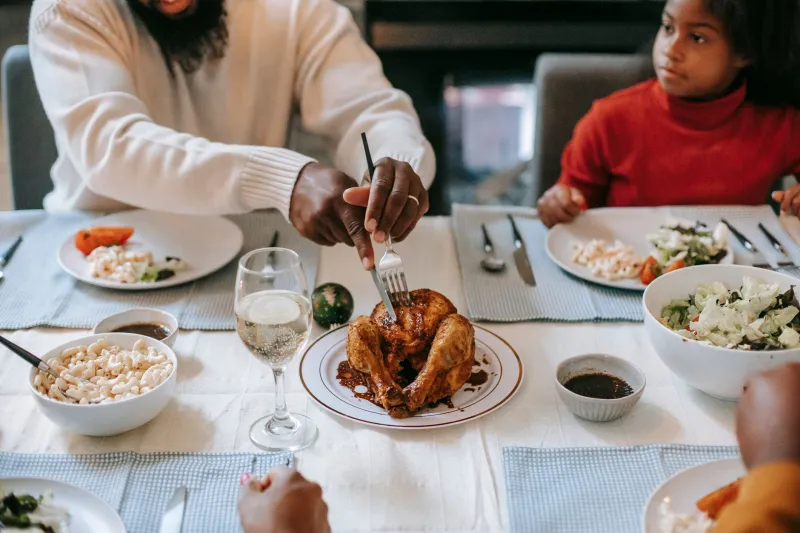
Sometime around mid-century, a decent-sized American household could run its entire week of meals off a single Sunday roast. The beef went on Sunday. The leftover meat became sandwiches on Monday. Tuesday was hash — potatoes, onions, whatever was in the icebox, combined with the remaining shredded beef into something that tasted better than it had any right to. Wednesday, the bones went into a stockpot. By Thursday, that stock was the base of a soup that would last through the weekend.
One cut of meat. Five days of eating. Almost nothing wasted.
That wasn't nostalgia — that was math. And it's a kind of math that most American households have completely forgotten how to do.
The Kitchen Was a Logistics Operation
For much of the early twentieth century, the family cook — almost always a woman, a reality worth acknowledging even as we examine the economics — operated less like a chef and more like a supply chain manager. Every purchase had to stretch. Every leftover had a second life. The refrigerator, once it became standard in American homes in the 1940s and '50s, didn't create food abundance so much as it extended the runway on what you already had.
Bulk cooking wasn't a trendy meal-prep concept shared on Instagram. It was survival infrastructure. A pot of dried beans cost pennies and could anchor three or four different meals depending on what else was available. Bread that went stale became bread pudding or stuffing. Vegetable scraps went into stock. Fat rendered from cooking was saved in a tin by the stove and used again.
Families knew exactly what they spent on food because the money was physical and finite — often literally counted out in cash at the grocery counter. There was no abstraction between the dollar and the dinner. You felt the cost of every meal in a way that a credit card tap at a self-checkout simply doesn't replicate.
The Prosperity Paradox
Here's the strange thing: Americans didn't abandon these habits because they stopped working. They abandoned them because they started working — economically speaking. As household incomes rose through the postwar decades, the urgency of stretching every ingredient faded. Convenience foods arrived on supermarket shelves and offered something that tasted almost as good as homemade, in a fraction of the time, for a price that felt manageable.
TV dinners. Canned soups. Boxed mac and cheese. Frozen pot pies. These weren't failures of American cooking culture — they were rational responses to changing economic conditions. When both adults in a household are working full-time, the calculation around a three-hour Sunday roast and its week of derivatives looks very different than it did when one person's primary job was managing the household.
But something got lost in the transition. The skills atrophied. The mental framework that connected Sunday's roast to Thursday's soup dissolved. And as the food industry evolved to meet — and aggressively cultivate — the demand for convenience and variety, the expectation of what a meal should be shifted fundamentally.
By the 1990s, serving leftovers had quietly become a minor social embarrassment in many households. By the 2010s, the idea of eating the same protein three days in a row felt like a deprivation. Today, with delivery apps offering forty different restaurant options at 11 p.m. on a Tuesday, the very concept of a meal as part of a connected weekly food strategy has become almost quaint.
The Hidden Cost of Novelty
The USDA estimates that American households throw away somewhere between 30 and 40 percent of the food they purchase. That number is almost impossible to sit with when you consider it in dollar terms. For a family spending $300 a week on groceries — a reasonable figure for a household of four in most American cities — that's roughly $100 disappearing into the trash every single week. Over a year, that's more than $5,000 in food that was bought, not eaten, and discarded.
The mid-century roast strategy wasn't just thrifty. It was a hedge against that waste. When you've committed to eating your way through a piece of meat across five days, you're not throwing it out on day two because something more interesting showed up on a menu app.
The modern food economy actively works against this kind of thinking. Grocery stores are engineered to encourage impulse purchasing. Restaurant delivery platforms are optimized to be opened when you're hungry and undecided — the worst possible state for rational food economics. Meal kit services promise variety and reduced waste but often deliver the opposite, with pre-portioned ingredients that leave no room for the kind of creative leftover thinking that once defined American home cooking.
What the Old Approach Actually Required
It's worth being honest about what the roast-to-soup weekly strategy demanded. It required time — real, substantial time — that many modern households genuinely don't have. It required someone to be home, to be planning, to be thinking about Thursday's dinner on Sunday morning. That's not a trivial ask in a dual-income household where both adults are commuting, managing childcare, and trying to decompress.
But there's a difference between acknowledging the constraints of modern life and pretending the financial consequences don't exist. The average American household now spends more on food away from home than on groceries — a historic inversion that would have been unrecognizable to any previous generation. The convenience is real. The cost is also real. We've just gotten very good at not connecting the two.
The Sunday roast that fed a family through Thursday wasn't just a recipe. It was a relationship with money, with ingredients, and with the week ahead. We traded it for options. Whether that was a good deal probably depends on how carefully you're looking at your bank statement.