When Every Photo Was a Gamble: The Disappearing Ritual of the Family Album
The Anxiety of the Shutter Click
Every photograph used to be a leap of faith. When your dad raised that Kodak Instamatic at your eighth birthday party, nobody knew if the moment would survive until the film came back from the drugstore two weeks later. Maybe the lighting was wrong. Maybe someone blinked. Maybe the whole roll got ruined by that accidental exposure to sunlight when you opened the camera back too soon.
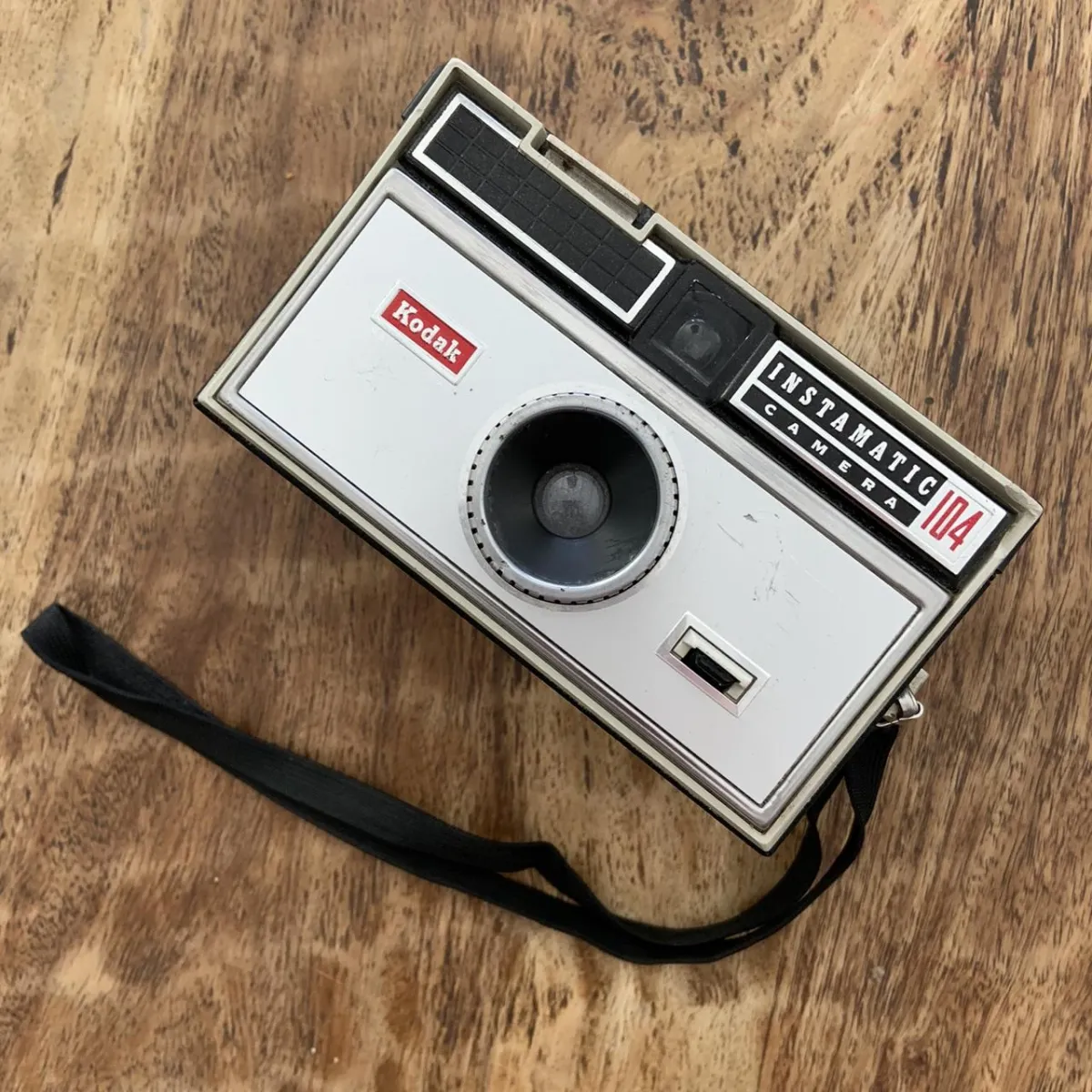 Photo: Kodak Instamatic, via media-photos.depop.com
This uncertainty made every frame precious. With only 24 or 36 shots per roll, families approached photography like military strategists. "Wait, let me get one more of Grandma with the cake," became a calculated decision involving real money and finite resources. Film cost money. Developing cost money. Prints cost money. Every click of the shutter was an investment in a memory that might not even exist.
The Sacred Ritual of Album Assembly
Once those glossy 4x6 prints finally arrived in their distinctive yellow Kodak envelope, the real ceremony began. Families would gather around the kitchen table like archaeologists examining ancient artifacts. Each photo got scrutinized, discussed, and assigned its place in the family narrative.
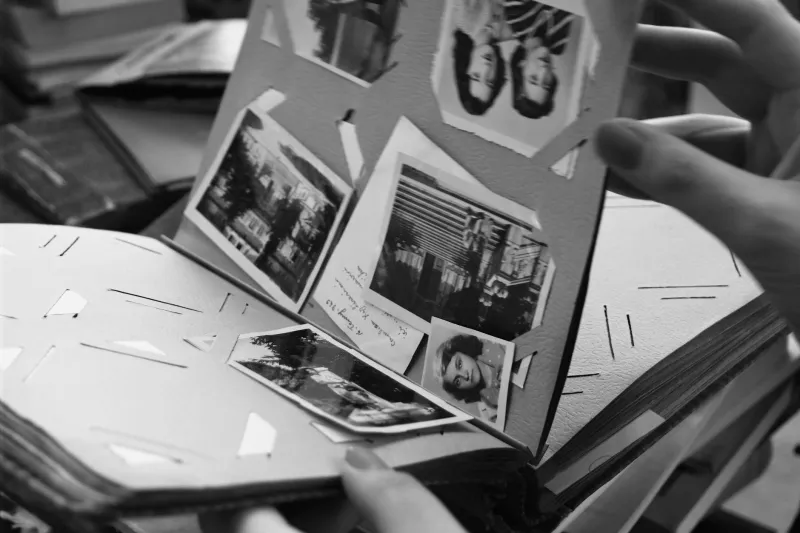
The photo album wasn't just storage—it was curation. Mothers spent hours arranging pictures in chronological order, writing captions in careful cursive beneath each image: "Tommy's first day of school, September 1987" or "Vacation to Yellowstone—remember the bear?" These handwritten annotations became as important as the photos themselves, providing context that pure images couldn't capture.
Those albums had weight, literally and figuratively. The thick cardboard pages, the protective plastic sheets, the satisfying thunk when you closed the cover—everything about them suggested permanence. They lived on coffee tables and bookshelves, ready to be pulled out whenever relatives visited or when someone needed to settle a family dispute about when exactly Uncle Bob grew that mustache.
The Smell of Memory
Physical photo albums carried their own distinct aromatherapy. The chemical tang of developing solution that clung to fresh prints. The vanilla scent of aging paper. The plasticky smell of those protective sleeves that somehow never quite aired out. These olfactory signatures became as much a part of family memory as the images themselves.
Kids learned to handle albums with reverence. You didn't just flip through them—you studied them. Each page turn was deliberate, each photo an opportunity to ask questions: "Who's that person standing next to Grandpa?" or "Why is Mom's hair so big in this one?" The physical act of looking through family photos was a shared experience that demanded attention and sparked conversation.
Today's Infinite Scroll of Forgetting
Now we carry thousands of photos in our pockets, yet most of us couldn't tell you what we photographed last month. Our phones automatically capture, store, and organize images with algorithmic precision, but somehow the magic has evaporated. We snap pictures of everything—our lunch, our commute, our pets doing absolutely nothing remarkable—because storage is essentially infinite and every shot is free.
The modern photo library is a black hole of forgotten moments. We take 47 pictures of the same sunset, meaning to delete 46 of them later, but never do. Our devices helpfully create "memories" by assembling random photos into slideshow compilations we rarely watch. The photos exist, technically, but they live in a digital limbo where they're both everywhere and nowhere at once.
What We Lost in Translation
The shift from physical to digital photography represents more than just technological progress—it's a fundamental change in how we relate to our own memories. When photos required patience, planning, and physical handling, they carried emotional weight proportional to the effort invested in creating them.
Modern convenience has eliminated the anticipation, the curation, and the communal experience of revisiting family history. We've traded the tactile pleasure of flipping through album pages for the endless scroll of a smartphone screen. We've swapped handwritten captions full of personality for automatically generated metadata that lacks soul.
Most critically, we've abandoned the concept of selection. When every moment can be captured and stored, nothing feels special. The old system of limited shots forced families to identify what truly mattered. Now, in trying to document everything, we've somehow made nothing feel worth remembering.
The Backup Anxiety Nobody Talks About
Here's the cruel irony: those old photo albums were nearly indestructible. Sure, they could burn in a house fire or get damaged in a flood, but under normal circumstances, they lasted decades. Today's digital photos, despite being stored in "the cloud," feel more fragile than ever.
How many people have actually backed up their photo libraries properly? How many trust that their thousands of images will survive the next phone upgrade, the next platform migration, the next corporate acquisition? We've gained infinite storage capacity but lost the confidence that our memories will outlive us.
The family photo album represented more than organized pictures—it was a physical contract with the future, a promise that these moments would endure. Today's digital galleries offer no such guarantee, leaving us with more photos than ever before and less faith that any of them will matter in ten years.