When Grocery Shopping Meant Making Friends: The Death of America's Last Social Errand
The Grocery Store as America's Town Square
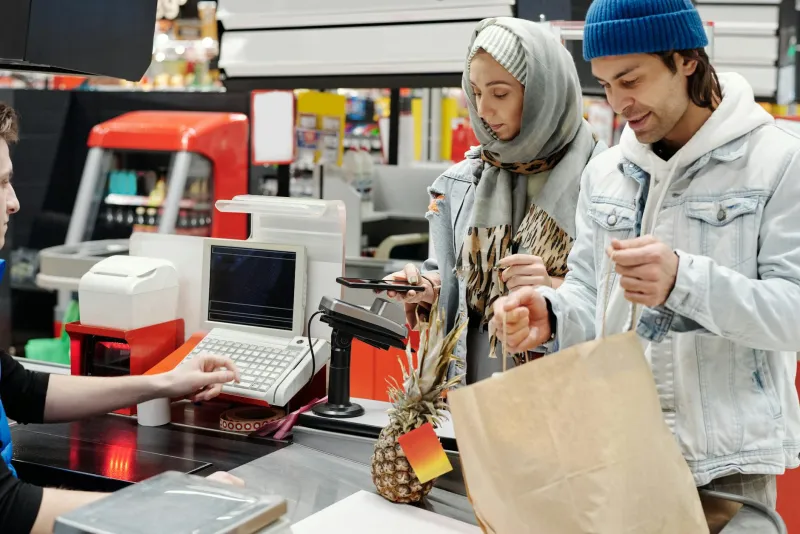
Walk into any American supermarket today and you'll witness a peculiar ritual: people actively avoiding other people. Shoppers weave through aisles with earbuds in, scan items themselves at sterile kiosks, and tap cards without making eye contact. The entire experience has been engineered to eliminate what grocery stores once provided in abundance — human connection.
But rewind to 1975, and the local grocery store was America's unofficial community center. Your cashier knew your name, your kids' ages, and whether you preferred paper or plastic before you even asked. The checkout line wasn't an inconvenience — it was where you caught up on neighborhood gossip, learned about Mrs. Henderson's hip surgery, and heard which houses were going up for sale before the signs even appeared in yards.
When Efficiency Wasn't the Point
Back then, a trip to the grocery store could easily take two hours, and nobody complained. The produce manager would help you pick the perfect cantaloupe, explaining exactly how to tell when it was ripe. The butcher knew you liked your steaks cut thick and would throw in soup bones for your dog without being asked. The bag boy — always a local teenager saving for college — would not only pack your groceries with care but carry them to your car while telling you about his plans for homecoming.
This wasn't inefficiency. It was community infrastructure disguised as commerce.
Contrast that with today's grocery experience, where the average American spends just 41 minutes per shopping trip, including checkout. Self-service has become so dominant that many stores employ more security guards to watch the self-checkout area than actual cashiers to run traditional lanes. We've optimized the human element right out of what used to be our most reliable social interaction.
The Economics of Conversation
The transformation wasn't accidental. Labor costs drove the change, but so did our own impatience. By the 1990s, Americans began viewing any interaction that slowed them down as a personal affront. We demanded faster, cheaper, more convenient — and we got exactly what we asked for.
Self-checkout machines arrived in 1986, but they didn't really take off until the 2000s when retailers realized they could cut labor costs by 50% while making customers do the work for free. Today, nearly 96% of grocery stores offer self-checkout, and many are experimenting with fully automated stores where human employees are as rare as handwritten shopping lists.
The financial logic is undeniable. A self-checkout station costs about $125,000 to install but can replace 2-3 cashier positions that would cost $60,000 annually in wages and benefits. For retailers, the math is simple. For communities, the calculation is more complex.
What We Lost in the Optimization
When grocery stores eliminated cashiers, they didn't just cut labor costs — they severed one of the last reliable threads connecting Americans to their neighbors. The grocery store checkout was often the only place where people from different economic classes, ages, and backgrounds had regular, friendly interactions.
Your cashier might have been a college student, a retiree supplementing Social Security, or a single mother working two jobs. These brief conversations created a web of casual relationships that made neighborhoods feel like actual communities rather than just collections of houses.
Research from the University of Pennsylvania found that people who had regular interactions with service workers — cashiers, bank tellers, postal clerks — reported higher levels of community satisfaction and social connectedness. When those jobs disappeared or became automated, something invisible but important disappeared with them.
 Photo: University of Pennsylvania, via www.thelightingpractice.com
The Curbside Coup de Grâce
The COVID-19 pandemic accelerated changes that were already underway. Curbside pickup and grocery delivery, once luxury services for the wealthy or disabled, became mainstream expectations. Apps like Instacart and Amazon Fresh turned grocery shopping into a digital transaction completed without leaving your car or even getting dressed.
In 2023, online grocery sales reached $95.8 billion, representing about 12% of total grocery spending. For many Americans, grocery shopping has become as impersonal as ordering office supplies — a necessary task to be completed as efficiently as possible.
The Social Cost of Convenience
We gained convenience, saved time, and reduced costs. But we also lost something harder to quantify: the gentle social fabric that grocery stores once provided. The casual conversations, the familiar faces, the sense that you were part of a community that cared about your well-being.
Today's grocery experience reflects our broader social transformation. We've become a nation of individuals optimizing our personal efficiency rather than communities building relationships through shared daily rituals. The checkout line used to be where you learned that your neighbor's son made the baseball team or that the elderly woman down the street could use help with her yard work.
Now we learn these things from neighborhood Facebook groups — if we learn them at all.
The Future of Grocery Theater
Some stores are recognizing what was lost and trying to recreate it artificially. Whole Foods markets feature elaborate prepared food sections designed to feel like European marketplaces. Wegmans builds stores with cafes and seating areas to encourage lingering. But these feel like stage sets — designed experiences rather than organic community spaces.
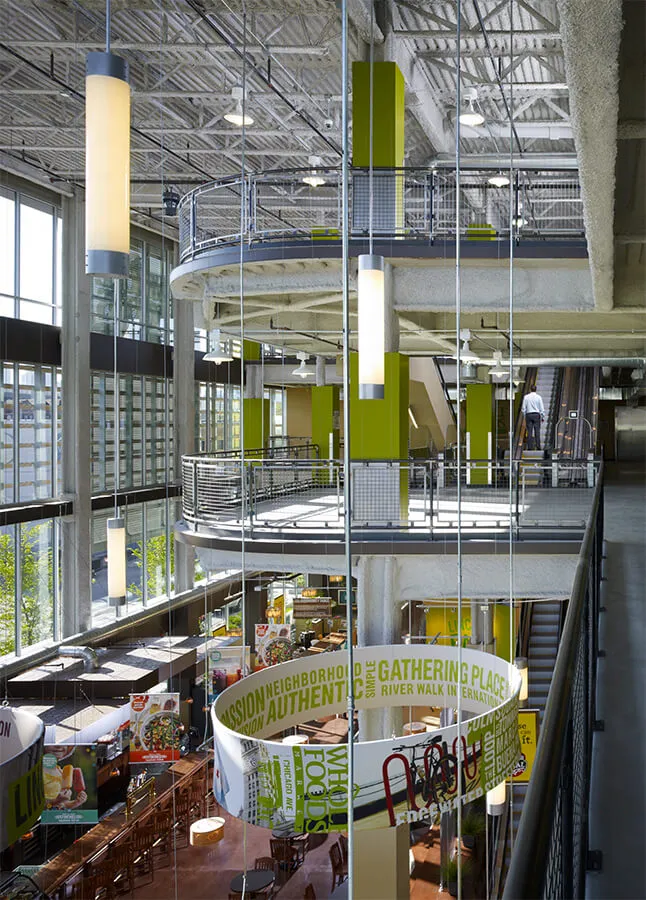 Photo: Whole Foods market interior, via www.cavagnero.com
The efficiency revolution in grocery shopping mirrors what happened across American retail. We optimized the humanity out of commerce, then wondered why shopping felt so lonely. The checkout line wasn't just about buying food — it was about maintaining the social connections that made neighborhoods feel like home.
In our rush to save time and money, we may have spent something more valuable: the daily dose of human connection that reminded us we weren't just consumers, but neighbors.