The Algorithm Doesn't Care That You Traveled by Train: Why .300 Doesn't Mean What It Used To
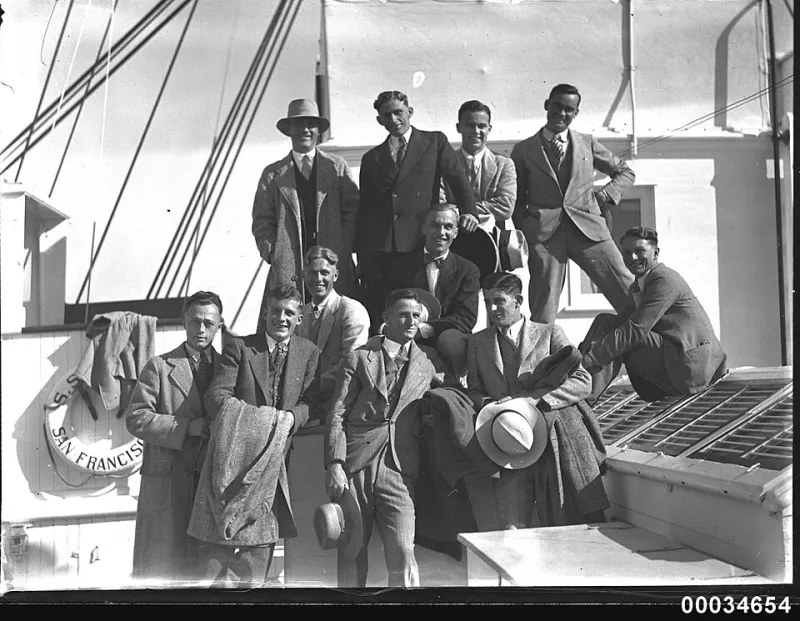
Photo: Australian National Maritime Museum on The Commons, No restrictions, via Wikimedia Commons
Somewhere in a group chat right now, a baseball fan is dismissing a Hall of Famer because he 'only hit .300.' Meanwhile, a hitter in 1911 who batted .334 — Ty Cobb's actual mark that season — was treated as something close to a sorcerer. Same game, same line on the scoresheet, wildly different meaning. The gap between those two reactions tells us something uncomfortable about how badly we understand the past.
The Dead Ball Wasn't a Metaphor
Start with the object itself. In baseball's dead-ball era, before 1920, the ball was soft, scuffed, and spit on by rule-bending pitchers who were very good at their jobs. It stayed in play until it disintegrated. Home runs were so rare that teams built entire strategies around the single, the stolen base, and the sacrifice. A slugger who hit 12 home runs in a season was a genuine threat.
Then add the equipment. Bats were heavier and handles were thicker. Fielders wore gloves barely bigger than their hands — the padded webbed mitts of today would have looked like oven mitts to a 1908 shortstop. Uniforms were flannel, which soaked up rain and weighed pounds when wet. Cleats, helmets (there were none for hitters until decades later), even the playing surfaces: everything was worse, and the numbers reflect it.
The Schedule Was a Second Opponent
Here's the detail that gets lost in every era comparison: how the players got to work. Until air travel became routine in the 1950s, teams moved between cities overnight on trains. A club finishing a Sunday doubleheader in Boston might board a sleeper car to St. Louis, arrive groggy, and play that afternoon. Road trips lasted weeks. Players slept in berths, ate dining-car food, and learned opposing hitters from scouting sheets typed on paper.
Nobody was doing video analysis, load management, or sleep tracking. Recovery meant a steak and a cigarette — plenty of players smoked in the clubhouse between innings. The idea of a personalized nutrition plan would have gotten you laughed off the train platform.
Today's Athlete Is a Science Project
Now hold that against the present. Modern players are selected, trained, and maintained by armies of analysts. Every pitch is tracked by cameras measuring spin rate to the decimal. Hitters study heat maps on tablets in the dugout. Travel is by charter jet with nutritionists on staff. Injuries that ended careers in 1920 are now four-to-six-week rehab assignments.
And yet — the .300 hitter has nearly vanished anyway. League-wide batting averages have fallen to historic lows because pitching has been optimized to the same degree. The average fastball today would have been the hardest throw anyone alive had ever seen in 1920.
This is the paradox at the heart of sports nostalgia: the numbers move in both directions at once. Old stars faced worse equipment and brutal travel, but also unoptimized pitching and no elite international talent pool. Modern stars face superhuman competition but also superhuman support. Neither comparison is fair, and the spreadsheet can't fix that.
Stop Comparing, Start Contextualizing
The honest way to honor past greatness isn't to inflate it or dismiss it — it's to ask what the number meant in its own weather. Cobb hitting .334 with a dead ball, on a train between cities, against pitchers who could legally grease it, is astonishing. Aaron Judge hitting 62 home runs against a century of accumulated pitching knowledge and video libraries is equally astonishing. They're not on the same leaderboard. They never were.
Every era's statistics are a snapshot of that era's constraints — the equipment, the travel, the knowledge, the rules. Read them that way and the past gets bigger, not smaller. Read them as a flat ranking and you'll spend your life arguing about numbers that were never measuring the same thing.
The train-riding hitters didn't have the algorithm. But the algorithm doesn't have their context either. That's a trade every generation of fans makes without noticing.