Before the Refrigerator Revolution: When Every Meal Was a Race Against Time
Open any American refrigerator today and you'll find vegetables slowly wilting in crisper drawers, leftovers growing mysterious mold, and condiments that expired months ago. This casual relationship with food waste would have horrified your great-grandmother, who structured her entire week around the terrifying reality that food went bad—quickly, inevitably, and expensively.
The Daily Food Journey
Before reliable refrigeration became standard in American homes during the 1940s and 1950s, grocery shopping wasn't a weekly expedition to a superstore. It was a daily pilgrimage through multiple specialized vendors, each offering perishable goods that demanded immediate consumption or careful preservation.
Housewives would start their mornings at the butcher shop, selecting meat for that day's meals based on what looked freshest and what the family budget could handle. The fish market required even more careful timing—fish bought on Tuesday needed to be cooked by Tuesday evening, or risk making the entire family sick. Dairy products came from local dairies with short shelf lives that made milk delivery a necessity rather than a convenience.
The Icebox Calculations
The lucky families who could afford iceboxes faced a constant mathematical challenge. A block of ice might last three days in summer, a week in winter. Every time you opened the icebox door, precious cold air escaped, shortening the life of everything inside. Families developed elaborate strategies for minimizing door openings—planning exactly what they needed before lifting the latch, organizing contents for maximum efficiency.
Ice delivery became a crucial lifeline, with ice wagons making regular rounds through neighborhoods. The ice man would carry massive blocks with special tongs, leaving them in kitchen iceboxes or outdoor ice houses. Running out of ice meant watching your food supply deteriorate in real time, turning a family's weekly grocery investment into expensive waste.
Preservation as Survival Skill
American women developed preservation techniques that would impress modern survivalists. They knew exactly how long different foods would last under various conditions and had backup plans for extending shelf life when needed. Milk that was starting to turn became pancakes or biscuits. Vegetables past their prime went into soups or stews. Nothing edible was ever thrown away if it could possibly be salvaged.
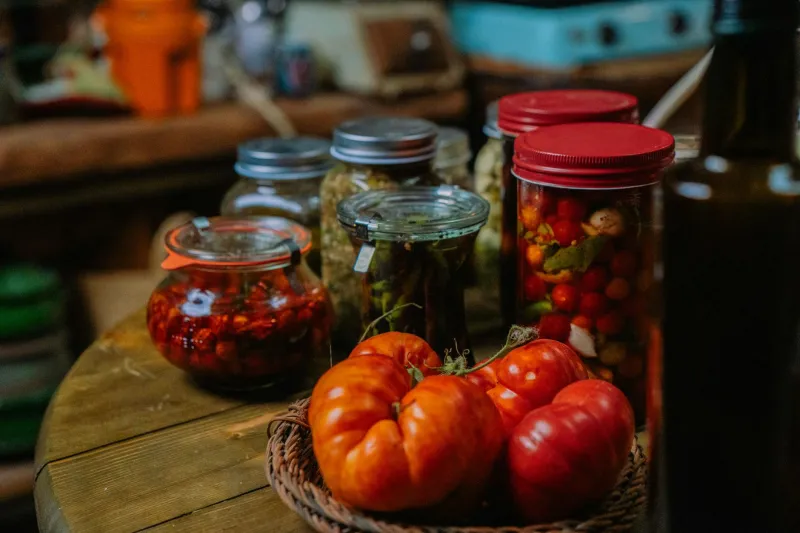
Root cellars, smokehouses, and pantries weren't quaint country decorations—they were essential infrastructure for food security. Families would spend entire weekends canning fruits and vegetables, not as a hobby but as insurance against winter scarcity. The ability to properly preserve food meant the difference between eating well and going hungry during lean months.
The Rhythm of Seasonal Eating
Without year-round access to fresh produce from global supply chains, American families ate according to natural seasons in ways that seem almost primitive today. Spring meant fresh greens and early vegetables. Summer brought an abundance of fruits and vegetables that required immediate processing for winter storage. Fall meant harvesting and preserving everything possible before winter's scarcity set in.
This seasonal rhythm created a different relationship with food variety. Eating strawberries in December wasn't just expensive—it was impossible. The first tomatoes of summer felt like genuine celebrations because they represented the end of a long winter of preserved and stored foods. Scarcity made abundance more meaningful.
The Social Networks of Food
Food preservation and sharing created strong community bonds that modern abundance has largely dissolved. Neighbors would coordinate preservation activities, sharing equipment and labor during canning season. When someone's cow produced more milk than their family could use, it would be shared with others who would reciprocate when their chickens were laying particularly well.
These networks weren't just about generosity—they were survival insurance. In a world where food spoilage could mean genuine hardship, community sharing systems ensured that temporary abundance in one household could benefit everyone, with the understanding that the favor would be returned when circumstances shifted.
The Skills We've Lost
Modern Americans have largely forgotten the sensory skills that our ancestors took for granted. They could tell by smell, touch, and appearance exactly how long different foods had been stored and how much longer they would remain safe to eat. They knew which parts of spoiling foods could still be salvaged and which had to be discarded.
These weren't abstract skills learned from books—they were daily survival knowledge passed down through generations of women who understood that feeding a family safely required constant vigilance and expert judgment about food quality and preservation.
When Abundance Changed Everything
The widespread adoption of electric refrigeration, combined with improved transportation and global food supply chains, fundamentally transformed American food culture. Suddenly, families could shop once a week instead of daily. Leftovers could be safely stored for days rather than hours. Seasonal restrictions on fresh produce gradually disappeared as imports made summer foods available year-round.
This abundance brought obvious benefits—less time spent on daily food procurement, reduced risk of foodborne illness, and greater variety in family diets. But it also quietly eliminated the careful planning and preservation skills that had defined domestic life for generations.
The Modern Waste Paradox
Today's American families throw away approximately 30% of the food they purchase—a level of waste that would have been incomprehensible to previous generations. Our refrigerators and freezers have become storage graveyards where good intentions go to die, filled with vegetables we meant to cook and leftovers we planned to eat.
This waste isn't necessarily a moral failing—it's the predictable result of abundance meeting human psychology. When food is relatively cheap and always available, the careful preservation instincts that once governed every kitchen decision become unnecessary luxuries rather than survival skills.
The Lost Art of Meal Planning
Pre-refrigeration families were master meal planners by necessity. They had to coordinate shopping, preservation, and consumption with mathematical precision to avoid waste and ensure adequate nutrition. Every meal was planned around what was available, what was about to spoil, and what could be preserved for future use.
Modern meal planning, when it happens at all, is more about convenience and variety than about preventing waste or maximizing the use of perishable ingredients. We've gained tremendous freedom in our food choices but lost the disciplined efficiency that scarcity once demanded.
What We Gained and Lost
The refrigerator revolution liberated American families from the daily anxiety of food spoilage and the constant work of preservation. It opened up new possibilities for meal variety, reduced foodborne illness, and freed up enormous amounts of time and mental energy for other pursuits.
But in solving the problem of food preservation so completely, we may have lost something valuable: the intimate knowledge of food cycles, the appreciation that comes from scarcity, and the community bonds that formed around shared preservation work. Our ancestors' relationship with food was more anxious but also more respectful, more wasteful but also more connected to natural rhythms and community networks.
The next time you toss expired produce into the garbage, consider that your great-grandmother would have found a way to use every bit of it—not because she was more virtuous, but because she had to be.