You Might Already Be a Winner: The Sweepstakes Era That Had America Licking Stamps and Dreaming Big
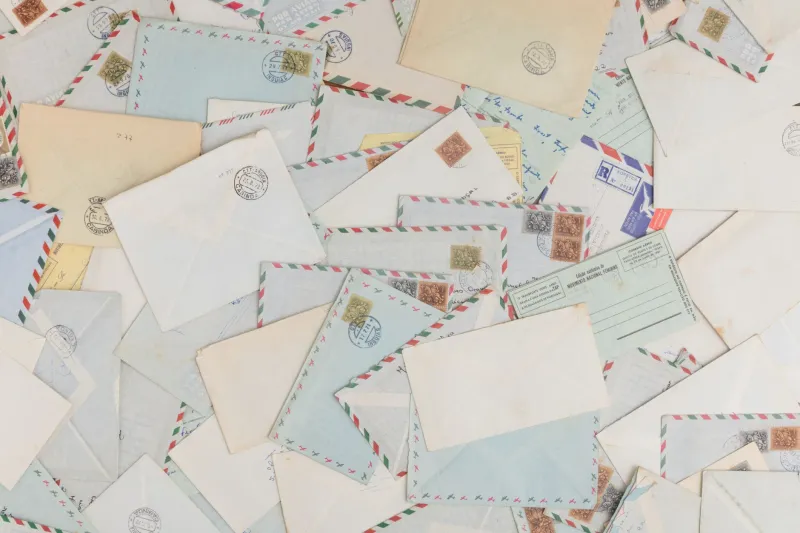
Picture a Tuesday afternoon sometime in the mid-1980s. You walk to the end of the driveway, open the mailbox, and pull out the usual stack. Electric bill. A catalog. And then — there it is. An oversized envelope, printed in bold red and gold, with your name in what appears to be handwritten font across the front. JOHN HENDERSON, YOU MAY HAVE ALREADY WON $1,000,000.
Your pulse did a thing. Just for a second. You knew, intellectually, that you probably hadn't won a million dollars. But you also didn't know know. And that gap — that sliver of genuine uncertainty — was worth more to the direct mail industry than almost anything else they could manufacture.
The Golden Age of the Envelope
Direct mail sweepstakes didn't just happen — they were engineered. Publishers Clearing House launched its sweepstakes model in 1967. American Family Publishers followed. By the 1970s and '80s, the format had become a fixture of American domestic life, arriving in mailboxes across the country with the reliability of the seasons.
The mechanics were deceptively simple. You received a packet — sometimes an impressively thick one — filled with stamps, stickers, order forms, and entry materials. You were legally not required to purchase anything to enter. But the whole physical experience was designed to blur that line. You'd peel a sticker of a sports car off one sheet and press it onto your entry form. You'd choose between YES and NO tokens. You'd lick an envelope and send it all back, and in doing so, you'd spent twenty minutes engaging with a catalog you might otherwise have recycled in seconds.
It was tactile. It was participatory. And it was enormously effective.
Why the Paper Made It Feel Real
There's a psychological dimension to physical mail that digital communication has never quite replicated. When something arrives in an envelope with your name on it — your actual, physical name, printed on something that traveled through the postal system specifically to reach you — it carries a weight that an email notification simply doesn't.
The sweepstakes companies understood this intuitively, long before behavioral economists had the language to describe it. The heft of the packet suggested substance. The personalization suggested selection. The deadline stamped in red created urgency. And the prize — always enormous, always illustrated with a photograph of a smiling family standing next to an oversized check — made the whole thing feel like a real transaction, a real possibility sitting right there in your hands.
Millions of Americans, particularly in working-class and rural communities, participated earnestly and repeatedly. For some households, filling out the sweepstakes entry was a weekly ritual, something the kids helped with at the kitchen table. The hope it generated wasn't naive — it was, for many people, one of the few low-cost, low-barrier shots at dramatic financial change available to them.
The Prize Patrol and the Living Room Moment
Publishers Clearing House turned the delivery of winnings into its own cultural event. The Prize Patrol — a camera crew that showed up unannounced at winners' doors with an oversized check — became a staple of Super Bowl commercials and daytime television. Watching someone genuinely stunned to find out they'd won a million dollars, right there in their bathrobe on a Sunday morning, was compelling television.
It also served a crucial function: proof. Real people. Real checks. Real reactions. In an era before the internet made skepticism a reflex, seeing was believing, and PCH made sure America kept seeing.
The model worked for decades. Then the internet arrived, and it didn't so much kill the sweepstakes as scatter it into a thousand smaller, cheaper, less satisfying pieces.
What Winning Looks Like Now
Today's digital giveaway landscape is enormous — brands run contests on Instagram, Twitter, TikTok, and their own websites constantly. Enter your email, follow this account, tag two friends, share this post. The barrier to entry is lower than ever. The prizes are real. The winners are announced publicly.
And yet something fundamental is missing.
A push notification telling you that you've been entered in a sweepstakes doesn't sit on your kitchen counter. It doesn't have your name printed on it in gold ink. It doesn't require you to peel anything, lick anything, or make a choice between a YES token and a NO token. It arrives, registers for half a second, and disappears into the feed.
The digital version is more efficient. It's also almost entirely without ceremony.
There's also a trust problem. Decades of email scams — the Nigerian princes, the lottery notifications from countries you've never visited, the urgent messages about unclaimed prizes — have conditioned Americans to treat unsolicited winning notifications as threats rather than opportunities. The skepticism that the physical envelope somehow bypassed has become the default response to anything that arrives digitally promising money.
The Hope Economy
Looking back, the direct mail sweepstakes era was really selling something more than magazine subscriptions. It was selling a feeling — a weekly, renewable, low-cost dose of what if. For a few minutes every time that envelope arrived, ordinary life paused and something larger felt possible.
That's not nothing. In fact, for a lot of American households navigating tight budgets and limited options, it was kind of everything.
The odds were always astronomical. The fine print was always there, if you looked. But the envelope didn't feel like fine print. It felt like possibility, delivered to your door, with your name on it.
We have more ways to win things now than ever before. We just don't feel it the same way.