Photo: Marjory Collins, Public domain, via Wikimedia Commons
In the early 1940s, military draft boards across the United States started flagging a problem that had nothing to do with enemy strategy or weapons production. A startling number of young men being called up for service were being rejected — not for injury or illness, but for malnutrition. Kids who had grown up during the Depression had done so without enough to eat, and their bodies showed it. They were underweight, undersized, and in some cases genuinely unfit for service.
 Photo: United States, via map.printable.us.com
The military reported that roughly 40 percent of rejections were related to conditions caused or worsened by poor nutrition. That number landed in Washington like a depth charge. If American children weren't being fed adequately, it wasn't just a social problem — it was a national security problem. And national security problems, in wartime America, got solved.
What followed was one of the most ambitious public health initiatives the federal government had ever attempted. And what it eventually became is one of the more uncomfortable stories in American institutional history.
The Act That Changed the Cafeteria
President Harry Truman signed the National School Lunch Act in 1946. The legislation was straightforward in its ambition: ensure that every American child, regardless of family income, had access to a nutritious hot meal during the school day. The program would be federally funded, administered through states, and designed around actual nutritional standards developed by the Department of Agriculture.
 Photo: Department of Agriculture, via www.nda.gov.za
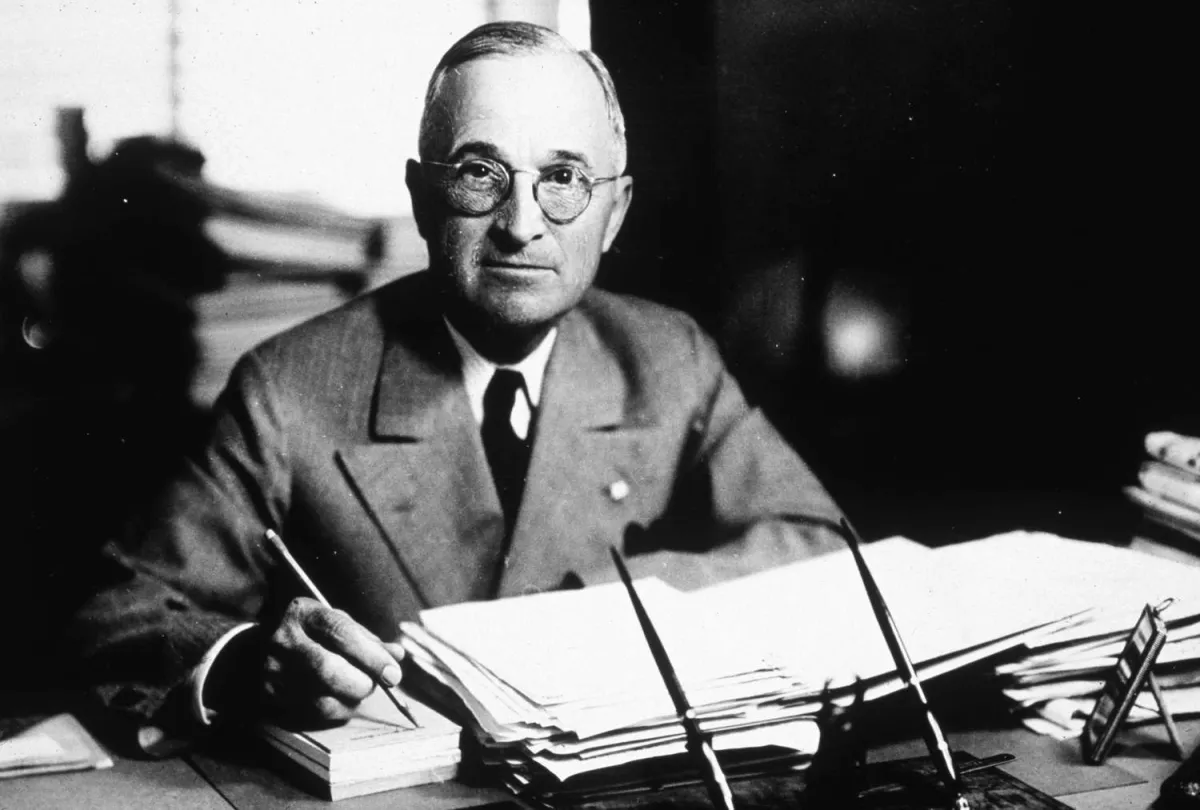 Photo: Harry Truman, via www.thoughtco.com
The original vision was genuinely impressive. Meals were supposed to provide roughly one-third of a child's daily nutritional requirements. The program had a built-in agricultural logic too — surplus commodities from American farms would be purchased by the government and routed into school kitchens, supporting farmers while feeding kids. It was the kind of policy that solved two problems at once, and in the late 1940s, it felt like exactly the kind of thing a confident, forward-looking country should be doing.
School kitchens hired cooks. Real cooks. Women who knew how to prepare food from scratch, who understood how to make large quantities of genuinely nourishing meals. The cafeteria wasn't glamorous, but it was functional in the most important sense: kids ate real food, prepared that day, on-site.
The Tray Looked Different Then
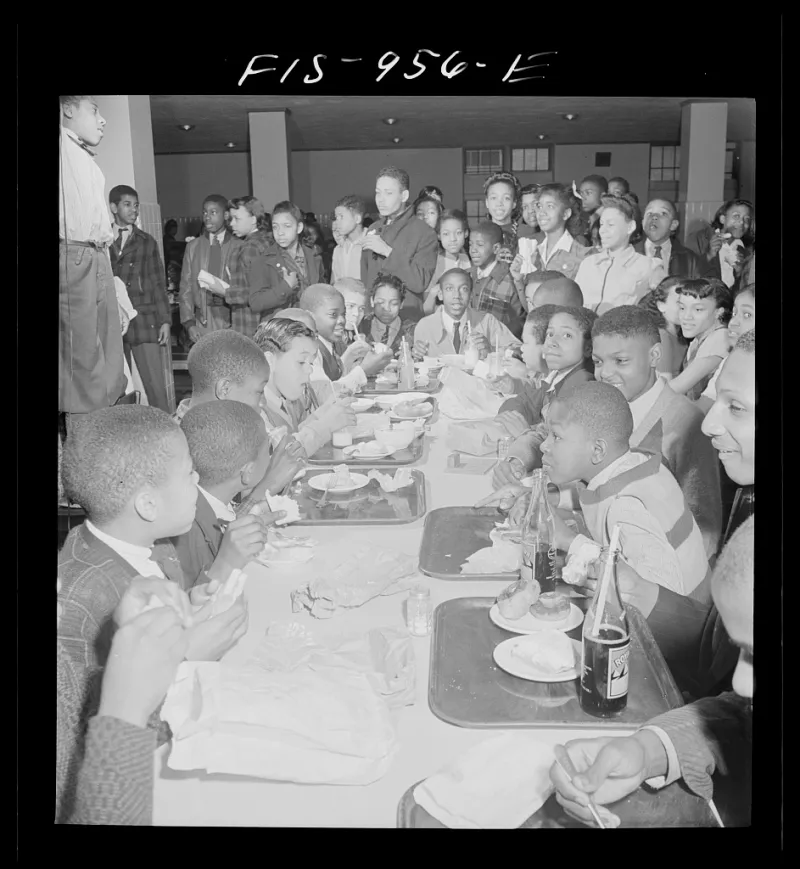
Talk to Americans who went through the school lunch program in the 1950s and 1960s and a consistent picture emerges. The food wasn't always exciting. There was a lot of canned corn and institutional mashed potatoes. The rolls were sometimes stiff and the milk was always cold. But there was protein. There were vegetables. There was a hot entrée that had been cooked in the building that morning.
For children from low-income families, this meal was often the most nutritionally complete thing they ate all day. That wasn't an accident — it was the point. The program's architects understood that food insecurity was real and widespread, and they designed the lunch to compensate for what kids might not be getting at home.
Participation grew steadily through the postwar decades. By the 1970s, tens of millions of children were eating school lunch every day. The program had become part of the basic infrastructure of American childhood, as expected and unremarkable as the school bus.
When the Economics Changed Everything
The problems started accumulating gradually, through a series of policy shifts that each made a certain kind of sense in isolation but combined to transform the program almost beyond recognition.
Budget pressures in the 1980s led to changes in how the program was funded and administered. Cost-cutting became a dominant concern. The USDA's commodity system, originally designed to route healthy agricultural surplus into school kitchens, increasingly delivered processed products — cheese products, ground beef of varying quality, canned goods — rather than fresh ingredients.
At the same time, many school districts began contracting food service out to private companies. The logic was efficiency: let specialists handle the logistics, reduce administrative overhead, standardize the operation. What it actually meant was that decisions about what children ate were increasingly being made by contractors optimizing for cost per tray rather than nutritional outcome per child.
Frozen entrees replaced scratch cooking. Fryers replaced ovens. The cooks who had worked in school kitchens for decades retired and weren't replaced by people with the same skills — because the new system didn't require those skills. You didn't need to know how to make a beef stew if your job was reheating a pre-portioned frozen product.
The Pizza-as-Vegetable Moment
Nothing illustrated how far the program had drifted from its origins quite like a 2011 congressional debate over school nutrition standards. The USDA had proposed updated guidelines that would have, among other things, limited the frequency of pizza and required larger portions of green vegetables. The proposal was met with fierce lobbying from food service companies and frozen pizza manufacturers.
Congress ultimately passed a spending bill that blocked the new standards and included language allowing tomato paste on pizza to count toward vegetable requirements. The two-tablespoons-of-tomato-paste-equals-a-vegetable provision became a national punchline. It was also a precise illustration of how thoroughly the program's original nutritional logic had been overtaken by commercial and political interests.
Harry Truman's lunch program had been designed to compensate for what the market wasn't providing to children. Seventy years later, the market was writing the nutritional standards.
What the Tray Holds Now
The picture isn't entirely bleak. The Healthy, Hunger-Free Kids Act of 2010 brought genuine improvements — more whole grains, stricter sodium limits, more fruit and vegetable requirements. School nutrition has become a more active area of policy debate than it's been in decades. Some districts have made remarkable strides with local sourcing and scratch cooking programs.
But the baseline reality in many schools remains a long way from 1946. Chicken nuggets, flavored milk, packaged sides, and processed entrees are standard in cafeterias across the country. The children eating them are, in many cases, food insecure — exactly the population the original program was designed to serve.
The ambition that launched the National School Lunch Program was genuine and the need it addressed was real. A generation of American children were fed better because of it. The question worth sitting with is how a program built around that ambition ended up somewhere so different — and what it would take to find its way back.