The Unlocked Door Nobody Knocks On Anymore: How the Drop-In Visit Became America's Forgotten Social Custom
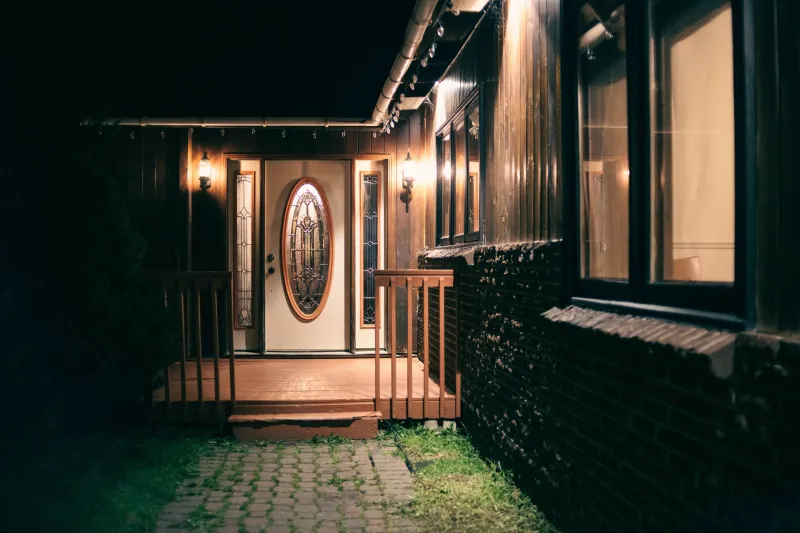
Picture this: it's a Saturday afternoon in 1974. You're sitting in your living room watching a game when there's a knock at the door. You open it. It's your neighbor Dave, maybe holding a six-pack, maybe not. He just felt like stopping by. You let him in. Your wife calls out a greeting from the kitchen. Dave stays for two hours. Nobody scheduled anything. Nobody's plans were disrupted. This was just how people existed near each other.
Now picture the same scenario today. The knock would be alarming. Who shows up without texting first? Is something wrong? Are you even dressed? Is the house clean enough? The whole interaction would be laced with low-grade anxiety — and Dave would probably know better than to try it in the first place.
The spontaneous visit didn't just fade out of American life. It was quietly declared unacceptable, and most of us didn't even notice it happening.
When Availability Was the Default
For most of the 20th century, being home meant being available. There was no mechanism to signal otherwise. No status indicator, no 'do not disturb' setting, no way to be technically reachable but emotionally unavailable. If you were home, you were home — and neighbors, friends, and extended family operated accordingly.
Drop-in culture was especially alive in working-class and immigrant communities, where homes were social hubs by necessity. Apartments were small and the outdoors was shared. People spilled into each other's spaces naturally. In suburban neighborhoods, the front porch was literally designed for this kind of casual availability — a transitional space between private and public, an invitation to linger.
Kids ran between houses without announcement. Parents followed. Someone always had coffee on. Someone always had something to say. The social fabric of a neighborhood was maintained through these unplanned moments, not despite them.
The Technology That Changed the Terms
The first major shift came with the answering machine, which gave people the ability to screen calls — to be home but officially unreachable. That was the beginning of managed availability. You could be present without being accessible.
Cell phones deepened it. Once everyone had a device on their person at all times, showing up without calling first started to feel presumptuous. If you can reach me instantly, the logic went, why didn't you? The unannounced visitor had implicitly rejected the easier option — and that rejection felt pointed.
Then came smartphones, calendars, and the full architecture of scheduled modern life. Playdates replaced spontaneous outdoor play. 'Getting together' became a logistical operation involving Google Calendar, parking considerations, and dietary restrictions confirmed in advance. The idea of just appearing at someone's home began to feel not just unusual but vaguely aggressive — an imposition of your timeline onto someone else's carefully managed day.
What the Shift Did to Neighborhoods
Walk through most American suburbs today and you'll notice something eerie: they look inhabited but feel empty. Cars in driveways. Lights on inside. But nobody outside. No one on porches. No kids migrating between yards. The physical proximity of neighbors hasn't changed — the social proximity has collapsed entirely.
This isn't just nostalgia talking. Research on social isolation in America consistently finds that people report fewer close friends and less frequent in-person contact than they did in previous generations. The causes are multiple and complex, but the death of spontaneous visiting is part of the picture. When every social interaction requires advance planning, casual connection becomes harder to maintain. Friendships that survive on unscheduled drop-ins are more resilient than ones that require coordination — because coordination has a dropout rate.
If seeing a friend requires a two-week calendar negotiation, a lot of friendships simply don't survive the friction.
The Paradox of Scheduled Spontaneity
Here's the strange part: Americans today talk constantly about wanting more genuine connection. Loneliness is described as a public health epidemic. People are anxious about the quality of their relationships. And yet the cultural norms we've built make casual, low-stakes social contact almost structurally impossible.
You can't be spontaneously connected with people you've trained to expect advance notice. The very act of showing up unannounced — which was once a gesture of warmth and comfort — now reads as a failure to respect boundaries. We've optimized our social lives so thoroughly that we've optimized out the part where things just happen.
Some communities have pushed back. There are intentional neighborhoods — cohousing developments, cooperative living arrangements — built specifically around shared space and unplanned interaction. Some friend groups have explicitly revived open-door policies as a kind of countercultural statement. But these are deliberate choices made against the grain of the default culture, not the default itself.
The Door That Used to Be Open
None of this means that boundaries are bad or that privacy is overrated. The old drop-in culture had its own pressures — the expectation of perpetual availability, the lack of alone time, the assumption that your home was always a public space. Not everyone loved it.
But something real was lost when we moved from a culture of unscheduled presence to one of managed access. The neighbor who knocked on a Tuesday afternoon wasn't just killing time. They were maintaining a relationship through the most natural method available: showing up.
We've replaced that with a text that says 'we should hang out soon' — which, as everyone knows, usually means never.