When Everyone Knew Your Business: America's Era of Accidental Eavesdropping
The Original Social Network
In 1952, if you wanted to call your boyfriend in rural Kansas, you might have to wait your turn. Not because the phone was busy, but because Mrs. Henderson down the road was already using the line you shared with seven other families. And when you finally got your chance to talk, there was a pretty good chance that Mrs. Henderson — and possibly the Johnsons, the Millers, and old Mr. Peterson — were still listening in.
This wasn't a violation of privacy. This was just how telephones worked for most of America.
The party line system connected multiple households to a single telephone circuit, making phone service affordable for rural and small-town communities that couldn't justify individual lines. But it also created something unprecedented in human history: a technology that made private conversations accidentally public, and somehow, everyone just learned to live with it.
How to Share a Phone Line With Your Neighbors
Party lines operated on a simple but socially complex system. Each household had a distinctive ring pattern — two short rings, one long ring, or three short rings — that indicated which family had an incoming call. Everyone on the line could hear every ring pattern, and everyone could pick up their phone and join any conversation happening on the shared circuit.
The etiquette was elaborate and largely unspoken. Good neighbors were supposed to hang up if they accidentally answered someone else's call. They weren't supposed to eavesdrop on conversations, though everyone understood that some people would anyway. And they were expected to keep their calls reasonably short so others could use the line.
In practice, these rules were honored more in the breach than in the observance. Party lines became the original reality television, offering unfiltered access to neighbors' private dramas, financial troubles, romantic entanglements, and family disputes.
The Unintentional Gossip Network
What made party lines particularly fascinating was how they accidentally created comprehensive surveillance networks in small communities. Mrs. Peterson might overhear that the Smiths were having marriage problems during a late-night call to Mrs. Smith's sister. She'd mention it to her friend at the grocery store, who would then know to offer extra support when she ran into Mr. Smith at church.
This wasn't malicious surveillance — it was how communities stayed connected and took care of each other, albeit in ways that would horrify modern privacy advocates. When someone was in trouble, word spread through the party line network faster than through any official channels. Neighbors knew about job losses, medical emergencies, and family crises almost as soon as they happened.
The flip side was that secrets were nearly impossible to keep. Teenage romances, financial difficulties, and family disputes became community knowledge whether families wanted to share that information or not. Privacy wasn't a technical feature of the telephone system — it was a social skill that required careful management of when, how, and what you said over the phone.
The Economics of Shared Secrets
Party lines existed because individual telephone service was prohibitively expensive for most Americans, especially in rural areas. In 1950, installing a private telephone line could cost the equivalent of $3,000 in today's money, plus monthly fees that represented a significant portion of a family's budget. Party lines made phone service accessible by spreading the infrastructure costs across multiple households.
But they also created a unique economic arrangement around privacy. Wealthy families could afford private lines and keep their conversations confidential. Everyone else participated in a kind of involuntary information sharing that made privacy a luxury good rather than a basic expectation.
This economic divide around privacy persisted well into the 1970s. Having a private phone line was a status symbol that signaled not just affluence, but social sophistication — the ability to conduct your personal business without community oversight.
The Art of Public Privacy
Families developed elaborate strategies for maintaining some semblance of privacy on party lines. They spoke in code, used euphemisms, and scheduled sensitive calls for times when they knew certain neighbors were likely to be busy. Some families developed private signals — specific phrases or references that conveyed meaning to the intended recipient while remaining opaque to eavesdroppers.
Teenagers became particularly creative, developing an entire vocabulary of innocent-sounding phrases that actually conveyed romantic messages. Parents learned to listen for the telltale clicks and breathing sounds that indicated someone else was on the line. And everyone became skilled at the delicate art of hanging up quickly when they realized they'd stumbled into someone else's private conversation.
These skills represented a kind of social technology — learned behaviors that allowed communities to maintain some privacy within a system that was inherently public. It was a collective adaptation to technology that prioritized access over confidentiality.
The Gradual Death of Shared Lines
Party lines began disappearing in urban areas during the 1960s as telephone infrastructure improved and individual service became more affordable. But they persisted in rural America well into the 1980s, and some remote areas maintained party line service until the early 1990s.
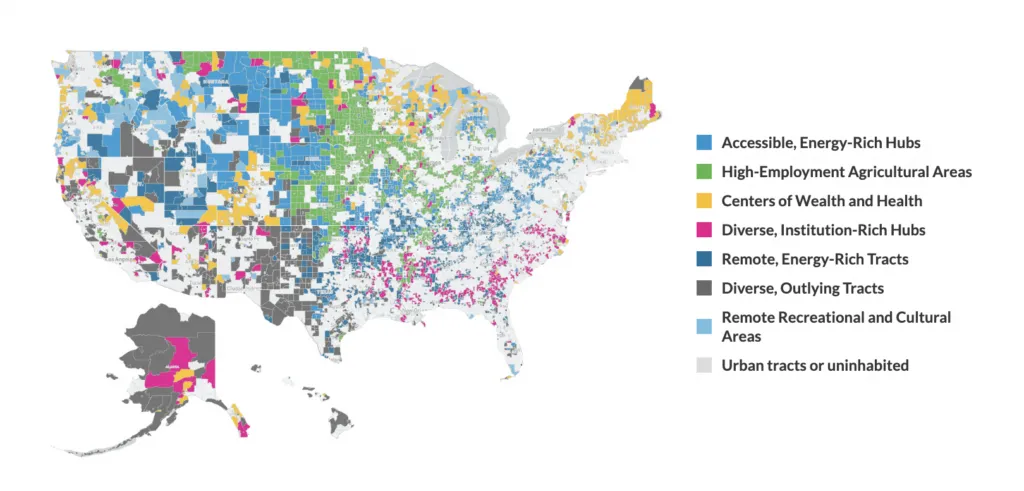 Photo: rural America, via www.aspencsg.org
The transition wasn't just technological — it was cultural. As Americans became more mobile and less connected to their immediate neighbors, the idea of sharing telephone access with people you might not know well became less acceptable. The social bonds that made party line etiquette work began to fray as communities became less cohesive.
By the time individual phone lines became standard, Americans had already begun to expect privacy as a default feature of communication technology. The brief experiment with shared telephone access began to seem like a quaint relic of a simpler time.
The Privacy Paradox
Looking back, the party line era reveals something fascinating about American attitudes toward privacy. During the same decades when telephone conversations were routinely overheard by neighbors, Americans also lived in communities where front doors were often left unlocked, children played unsupervised throughout neighborhoods, and personal business was generally considered community business.
The lack of communication privacy wasn't experienced as oppressive because it existed within a broader social context of mutual support and shared responsibility. People accepted that their neighbors might overhear their phone calls because those same neighbors would also help during emergencies, watch their children, and provide support during difficult times.
Digital Echoes of Analog Eavesdropping
Today's debates about digital privacy and surveillance have interesting parallels to the party line era. We worry about tech companies and government agencies listening to our conversations, reading our messages, and tracking our activities. But we've largely forgotten that for decades, Americans lived with the routine expectation that their private communications might be overheard by people they actually knew.
The difference is that party line eavesdropping was transparent, consensual (in the sense that everyone knew it was possible), and reciprocal. Everyone had equal access to everyone else's conversations. Modern digital surveillance is invisible, non-consensual, and asymmetrical — we're being monitored by entities that we can't monitor in return.
What We Gained and Lost
The end of party lines gave Americans something we now consider essential: private communication. We can have intimate conversations, discuss sensitive topics, and share personal information without worrying about unintended audiences. This privacy has enabled new forms of relationships and allowed people to maintain connections across much greater distances.
But we also lost something that's harder to quantify: the accidental intimacy of shared infrastructure. Party lines created a form of community awareness that helped neighbors support each other during crises and celebrate each other's successes. The gentle surveillance of the party line system was also a safety net that caught people when they fell.
In our rush toward perfect privacy, we may have overcorrected. Today's communication technology allows us to be completely isolated even while staying constantly connected. We can live next door to people for years without knowing their names, let alone their troubles.
The party line era reminds us that privacy and community exist in tension with each other. Perfect privacy enables individual freedom but can undermine collective care. The challenge is finding technologies and social norms that protect what we need to keep private while preserving what we need to share.