When Staring at Nothing Was Actually Something: The Lost Meditation of American Waiting
The Great American Stare-Off
Picture this: It's 1987, and your flight from Chicago to Denver has been delayed three hours. No smartphone to check. No laptop to open. No earbuds to plug in. Just you, a plastic chair, and the slow tick of the departure board flipping through gate changes. What did you do? You waited. Really waited.
For most of human history, waiting was a skill Americans had mastered out of necessity. We sat in barber shops reading month-old magazines. We stood in bank lines studying the ceiling tiles. We occupied doctor's waiting rooms, airport terminals, and DMV offices with nothing but our thoughts and the occasional conversation with a stranger.
Today, the average American checks their phone 96 times per day. The moment we sense boredom creeping in — that three-second gap between activities — we reach for our pocket computer. We've essentially eliminated waiting from the human experience.
The Departure Board Vigil
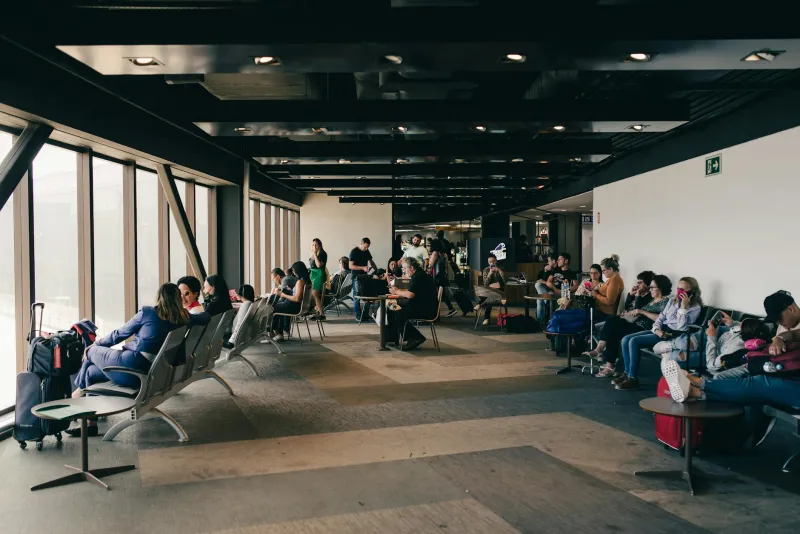
Airports were temples of waiting. Travelers would position themselves with clear sight lines to the departure boards, those mechanical marvels that flipped through letters and numbers with satisfying clicks. People developed strategies: which seats offered the best view, how often to check for updates, when to venture to the bathroom without missing crucial information.
Families played card games on their carry-on luggage. Business travelers struck up conversations about delayed connections and shared restaurant recommendations. Children pressed their faces against windows, watching planes taxi and take off. The airport bookstore was a thriving ecosystem where travelers browsed for hours, buying paperbacks they'd never finish.
Now? Passengers barely look up from their screens. Gate changes are pushed to phones instantly. Flight delays trigger automatic notifications. The communal experience of waiting has been replaced by individual digital cocoons.
The Doctor's Office Democracy
Remember when everyone in the waiting room was equally bored? The receptionist would call out names, and heads would pop up hopefully from magazines. People made small talk about the weather, their ailments, or the outdated reading material. Children colored in activity books while parents flipped through Good Housekeeping from 1994.
There was an unspoken etiquette: you didn't take the last copy of People magazine if someone else was eyeing it. You'd offer your seat to an elderly person. You'd help a mother wrangle her kids. The waiting room was a temporary community of shared inconvenience.
Today's medical waiting rooms are silent except for the tapping of screens. Patients check in on apps, receive text updates about delays, and sit isolated in their digital worlds. The receptionist has been replaced by a check-in kiosk. The community of waiting has dissolved.
The Bus Stop Philosophy Club
Public transportation stops were America's accidental philosophy clubs. Commuters would check their watches, scan the horizon for approaching buses, and inevitably start conversations. Weather was always a safe opener, but discussions would drift to work, family, politics, or the sorry state of public transit.
Regular commuters became familiar faces. The 7:15 AM crowd knew each other's routines. People would save seats, share newspapers, or warn newcomers about which buses ran late. These micro-communities formed around the simple act of waiting together.
Now, bus tracking apps tell you exactly when your ride will arrive. Commuters show up with military precision, board in silence, and immediately return to their phones. The bus stop community has been optimized out of existence.
What We Lost in the Translation
The elimination of waiting didn't just save us time — it fundamentally changed how Americans think and interact. Those empty moments used to be when we processed our days, made mental plans, or simply let our minds wander. Psychologists call this "default mode network" activity, and it's crucial for creativity, problem-solving, and mental health.
We also lost something more social. Waiting was one of the few remaining democratic experiences in America. Rich and poor, young and old, everyone waited the same way. It was a great equalizer that forced different types of people into the same temporary situation.
The conversations that sparked in waiting rooms, airport terminals, and bus stops were genuine human connections. They weren't curated, filtered, or algorithm-driven. They were random encounters with strangers who might offer a different perspective, a helpful tip, or just a moment of human warmth.
The Efficiency Trap
Don't get me wrong — smartphone efficiency has obvious benefits. We can accomplish tasks while waiting, stay connected to loved ones, and access infinite entertainment. But we've traded something intangible for something measurable, and the accounting doesn't quite balance.
Our ancestors would find it bizarre that we carry devices capable of accessing all human knowledge, yet use them primarily to watch videos of cats and scroll through political arguments. We've gained the ability to fill every moment but lost the ability to be comfortable with emptiness.
The New Waiting Game
Today's waiting is different but not extinct. We still wait — for downloads to complete, for rideshares to arrive, for food deliveries. But this waiting is active, not passive. We're constantly checking progress bars, tracking apps, and refreshing screens.
The old waiting was contemplative. The new waiting is anxious. We've replaced the meditation of boredom with the stimulation of constant input, and something essential about the human experience quietly slipped away in the process.
The next time you're stuck in a delay — flight, appointment, or otherwise — try putting your phone away. Just for a few minutes. See what happens when you let your mind wander, strike up a conversation, or simply observe the world around you. You might rediscover what Americans used to know: sometimes the best part of the journey is learning how to wait.