The Cast on Your Arm Was a Public Announcement: How Healing Used to Be Everyone's Business
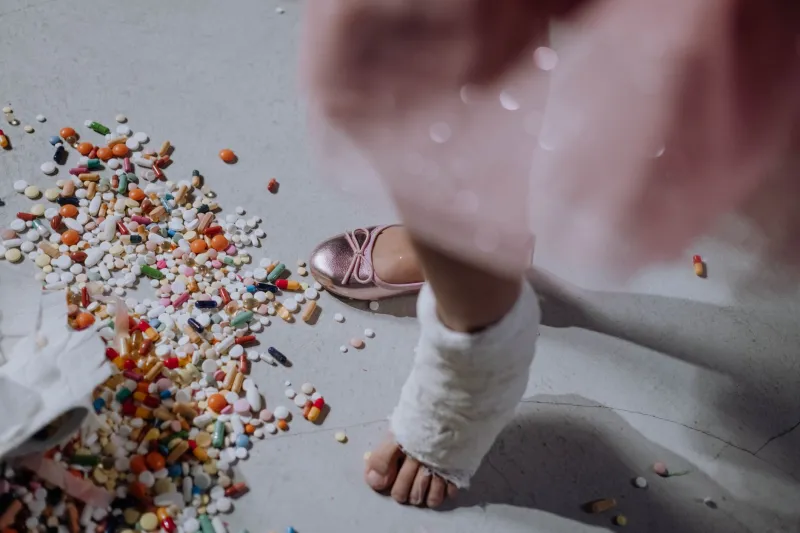
If you broke your wrist in 1975, everyone knew about it. Not because you told them — because you were walking around with a chalk-white plaster club attached to your forearm for the better part of two months. Coworkers signed it. Strangers asked what happened. You couldn't shake hands, couldn't type, couldn't drive, couldn't sleep without waking up at 3 a.m. with a maddening itch you could only scratch with a bent coat hanger. Recovery wasn't a private medical process. It was a public performance.
Today, that same wrist fracture might be treated with a lightweight brace you can remove to shower, a targeted surgical pin placed through a half-inch incision, and a physical therapy app on your phone. You could be back at your desk — or at least appearing to function normally — within days. The healing still happens. You're just not wearing it on your sleeve anymore. Literally.
Plaster, Patience, and a Lot of Itching
For most of the twentieth century, orthopedic treatment followed a fairly blunt philosophy: immobilize the injury completely and wait for the body to do its work. Plaster of Paris casts were the dominant tool, and they were exactly as uncomfortable as they sound. Heavy, warm, odor-absorbing, and unforgiving, they locked joints in place for anywhere from four to twelve weeks depending on the severity of the break.
A fractured femur — the large bone in your thigh — could mean months of traction in a hospital bed, followed by more months on crutches. A spinal compression fracture might result in a rigid body brace that made sitting in a car feel like an engineering problem. Even a simple broken collarbone meant wearing a figure-eight bandage that forced your shoulders back in a posture so rigid it looked like you were perpetually trying to impress someone.
The recovery timeline wasn't just a medical inconvenience. It restructured your entire life. Kids missed entire school semesters. Adults lost jobs. Athletes didn't come back from certain injuries — not because the bones didn't heal, but because six weeks of total immobilization left surrounding muscles so atrophied that full function never fully returned.
When the Surgeon Became a Mechanic
The shift began in the 1970s and accelerated through the 1980s and '90s as arthroscopic surgery — the technique of operating through tiny incisions using a miniature camera — moved from experimental to routine. What once required opening a joint completely could suddenly be done through punctures smaller than a pencil eraser.
A torn ACL in the knee, once a potential career-ender for professional athletes and a guaranteed year-long ordeal for everyone else, became a reconstructable injury with a predictable recovery arc. Rotator cuff repairs that used to require slicing through layers of shoulder muscle are now performed with instruments barely wider than a knitting needle.
Bone fractures themselves saw a parallel revolution. Internal fixation — the placement of titanium plates, rods, and screws directly onto or inside the bone — allowed surgeons to stabilize complex breaks mechanically rather than relying purely on external immobilization. The bone still needs to heal, but it heals in a controlled environment that allows the surrounding tissue to stay active. You keep moving. The hardware holds everything in place while you do.
The Invisible Recovery
What's genuinely strange about modern orthopedic care is how little of it is visible. An Olympic skier who blows out a knee in February can be photographed at a charity event in April looking completely fine — and actually be mostly fine. A construction worker who shatters a wrist on a Monday might be doing light duty by the following week.
Adaptive bracing has replaced the plaster cast in many situations. Modern braces are made from lightweight polymers and carbon fiber composites, designed to restrict specific movements while allowing others. They're adjustable, washable, and increasingly inconspicuous under clothing. Some are even connected to smartphone apps that track range of motion and guide rehabilitation exercises in real time.
This invisibility has a cultural side effect worth noticing. When recovery was obvious, communities responded to it. Neighbors brought casseroles. Bosses adjusted workloads without being asked. Kids got a legitimate excuse to sit out gym class for a month and a half. There was a social contract built around visible injury — one that acknowledged bodily vulnerability in a way that's harder to trigger when the injury isn't visible.
Today, someone recovering from spinal surgery might show up to a Zoom call looking perfectly normal, fielding full workloads, because the expectation has quietly shifted. If you can appear functional, the assumption is that you are functional.
What We Gained, What We Quietly Lost
The medical gains here are not subtle. People recover faster, more completely, and with less long-term disability than at any point in human history. Injuries that once ended careers — athletic, professional, or otherwise — are now manageable detours. The suffering that accompanied months in a full-leg cast is simply gone for many patients.
But there's something worth pausing on in the efficiency of modern recovery. The old cast-and-wait model was frustrating and limiting, but it also forced a kind of stillness. You couldn't rush it. The body set the schedule, and the schedule was visible to everyone around you. There was a built-in permission to slow down, to accept help, to be temporarily diminished without apology.
Modern medicine has largely eliminated that permission structure. Healing happens faster, but it also happens more quietly — tucked behind a brace, scheduled around work calls, managed with anti-inflammatories and physical therapy apps. The body still breaks. We've just gotten very good at making sure nobody has to know about it.
That's progress, clearly. But it's the kind of progress that changes something about how we relate to vulnerability — our own and each other's. The coat hanger and the itchy cast were miserable. They were also, in their way, honest.