Six Hours, No Screen, No Escape: What Flying Actually Felt Like Before Entertainment Existed
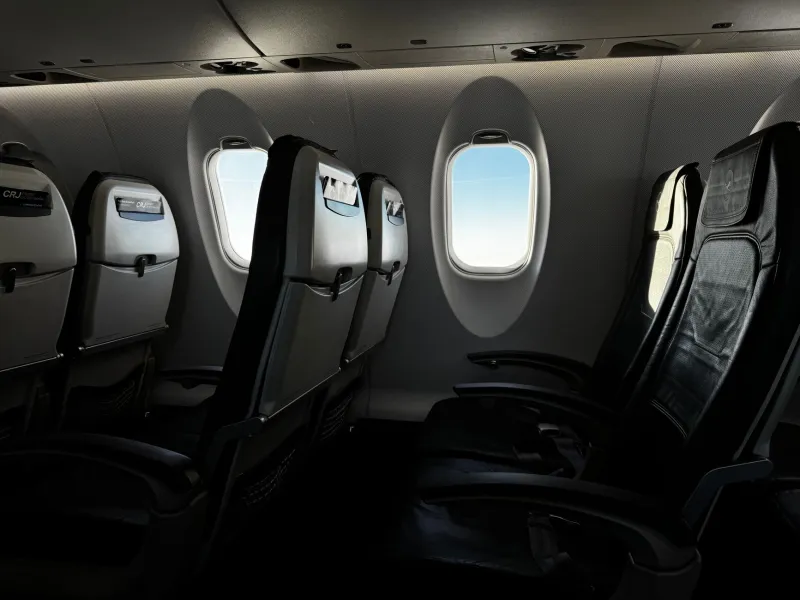
The Sky Was Quieter Than You Think
Sometime in the mid-1970s, a businessman boarded a Pan Am flight from New York to Los Angeles. He had a window seat, a folded copy of Time magazine, and roughly six hours ahead of him with absolutely nothing to do. No movie. No music. No podcast. No way to check email, because email didn't exist. Just clouds, cabin noise, and the person sitting two inches away from him in seat 14B.
 Photo: Los Angeles, via c8.alamy.com
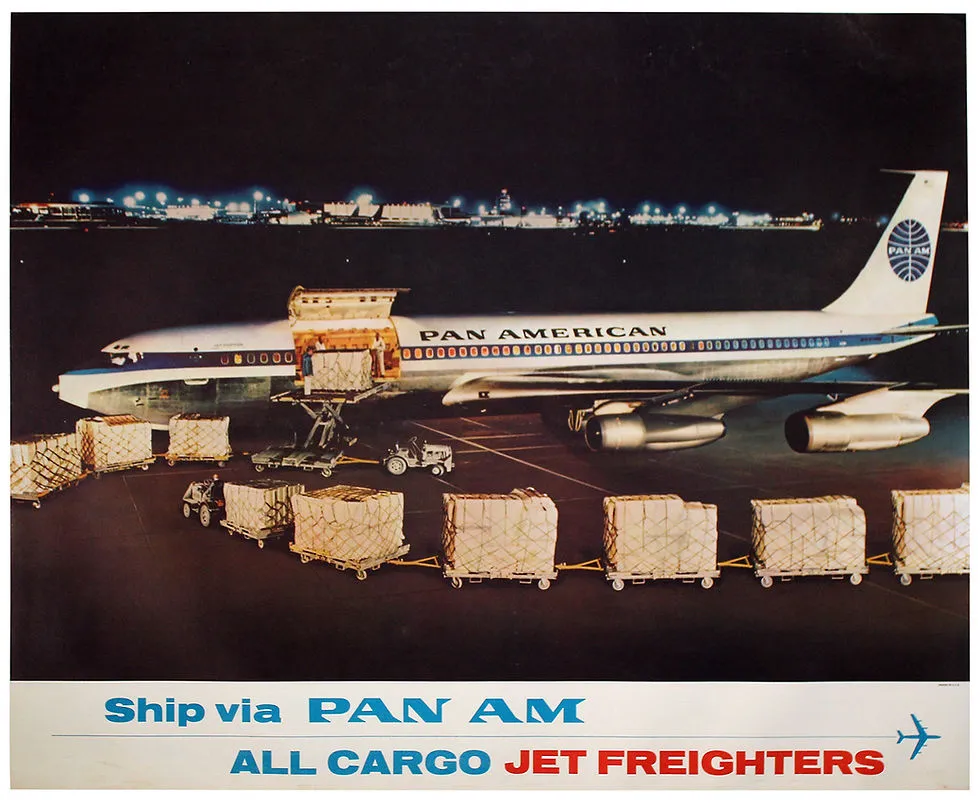 Photo: Pan Am, via static.wixstatic.com
That was flying. Not as a hardship — just as a fact.
Today, most Americans board a plane like they're setting up a personal media bunker. Headphones go in before the seatbelt clicks. A show queued up, a playlist loaded, maybe a download or two for the dead zones over Kansas. The goal, consciously or not, is to make the flight disappear — to arrive at the destination having barely registered the journey at all.
It didn't used to work that way. And the shift from one era to the other changed something about air travel that's genuinely hard to get back.
What a Long Flight Actually Looked Like
Commercial aviation in the 1960s and early 1970s was a different kind of experience from the ground up. Fares were regulated by the government, which kept prices high and passengers relatively few — flying was still something of an occasion, not a commodity. Cabins were roomier. Flight attendants — called stewardesses, almost exclusively women — were trained to be conversationalists as much as service providers.
Passengers brought books. They read the in-flight magazine cover to cover, including the articles about Caribbean resorts they'd never visit. They played cards. They talked — to their travel companions, to strangers, to whoever happened to be seated nearby. Transatlantic flights, which could stretch to eight or nine hours, turned into rolling dinner parties at altitude, fueled by full meals served on real plates with actual silverware.
The smoking section, which occupied the rear half of most aircraft until airlines began phasing it out in the 1980s and 1990s, created its own strange social ecosystem. People clustered, chatted, and killed time together in ways that seem almost unimaginable now.
The point isn't that it was better. It's that it was shared. The boredom was collective.
The First Screens Arrived Like a Gift
In-flight movie screenings started appearing on commercial routes in the late 1960s — a single film, projected onto a screen at the front of the cabin, visible to everyone or no one depending on your seat position and how bad the glare was. You watched what they showed, when they showed it, or you didn't watch at all.
For decades, that was the entertainment ceiling. A movie, maybe two on longer international routes. Headphones that required a coin on some carriers. The experience was communal by necessity — if the film was funny, the whole cabin laughed together. If it was boring, everyone suffered equally.
Personal seatback screens started rolling out in the late 1980s and became standard on major carriers through the 1990s. Suddenly, passengers could choose their own content. The communal screen at the front became obsolete. The shared experience fractured into hundreds of individual ones.
Then came Wi-Fi, streaming, and the smartphone — and the last remaining reasons to look up from your own private screen essentially vanished.
What the Silence Actually Produced
Here's the thing about those pre-screen flights that tends to get overlooked: people thought on them.
Not productively, necessarily. Not in some romanticized, journaling-in-a-leather-notebook way. Just... thought. Stared out the window at the patchwork of farms thirty thousand feet below. Let their minds wander in ways that modern life — with its constant availability of stimulation — rarely permits anymore.
Business travelers who flew regularly in that era often describe long flights as unexpectedly useful thinking time. Decisions got made. Problems got untangled. The enforced disconnection from telephones, offices, and obligations created a strange kind of clarity.
And the conversations. People who flew in the 1960s and 70s will tell you that talking to strangers on planes was just a normal part of the experience. You learned where people were from, what they did, where they were headed. Sometimes you exchanged business cards. Occasionally you stayed in touch. The flight was a social environment, not an isolation chamber.
When Flying Became Something to Survive
Deregulation hit the airline industry in 1978, and within a decade the whole character of commercial flying shifted. Fares dropped. Seats shrank. Flights filled up. The occasion became the commute.
As flying got cheaper and more crowded, the incentive to make it pleasant changed too. Entertainment became the solution — give passengers something to stare at, and they'll stop noticing the legroom. By the time seatback screens became standard, the implicit contract of air travel had flipped entirely. The goal was no longer to make the journey enjoyable. It was to make the journey imperceptible.
Today's passengers board with headphones already on. Eye contact in the boarding line is rare. The middle seat is a zone of aggressive non-acknowledgment. We've built elaborate personal cocoons at thirty thousand feet, and we're very good at maintaining them.
Nobody is arguing that the old way was superior. Six hours with nothing to do and nowhere to go is genuinely uncomfortable for a lot of people, and the freedom to watch three episodes of a show you love on a cross-country flight is a real and legitimate pleasure.
But something did disappear. The version of flying that forced you into proximity with strangers, that offered nothing but time and altitude and the low hum of jet engines, produced a different kind of traveler — one who arrived somewhere having actually been somewhere, rather than having simply teleported between content libraries.
The sky used to be a place you actually went. Now it's mostly just a gap between episodes.